Botanical Name: Andrographis paniculata.
Andrographis is an ancient medicinal herb with a long historical record.
It has been used for centuries in traditional folk medicine in India, China, Thailand, and other Asian countries.
It is an essential herb in Ayurvedic and traditional Chinese medicine (TCM) where it is used on its own or in conjunction with other medicinal herbs in specialized herbal formulas.
Over the past twenty or thirty years, the interest in this medicinal plant in the west has grown rapidly. Today it can be found in most natural health stores and many pharmacies.

What is Andrographis Used For?
Andrographis has been used throughout the centuries for a variety of ailments, a panacea of sorts.
Some uses are based only on traditional or folk medicinal uses while other have been validated by scientific studies, at least so some extent.
Andrographis has been used, e.g., for the following ailments.
- common cold
- flu
- diarrhea
- constipation
- intestinal gas
- colic
- jaundice
- Infections
- gonorrhea
- malaria
- sinusitis
- HIV/AIDS
- wounds
- ulcers
- a sore throat
- immune system support
- coughs
- bronchitis
- atherosclerosis
- diabetes
Health Benefits of Andrographis – Backed up by Scientific Studies or Trials
This bitter shrub has shown immunity-boosting capabilities by stimulating the body’s natural immune systems. Researchers have reported that the plant is effective in preventing the multiplication of cancer cells. 1
Andrographolides in the plant are thought to enhance immune function such as in the production of white blood cells, to support the release of interferon, and to promote the healthy activity of the lymphatic system. 2
Some scientists believe the herb may help in the fight against HIV and AIDS.
Traditional herbalists use this medicinal herb for many conditions for its anti-inflammatory. Several studies have in recent years supported the herb’s ability to reduce inflammation. 3
It is often used as an herbal treatment for pain associated with conditions such as muscular pain, arthritis, rheumatism, fibromyalgia and multiple sclerosis.
Andrographis is believed to be useful in the treatment of liver and gallbladder conditions such as viral hepatitis, jaundice, drug-induced liver damage, liver congestion and sluggish liver. 4
It has been found to be as effective as silymarin (the active component in milk thistle) in protecting the liver.
Clinical studies in China have shown that it helps to prevent blood clot formation. There, it is used as an herbal treatment for atherosclerosis and heart attack.
Some studies have shown that andrographis may be helpful in preventing the condition known as restenosis, or “reclogging” of arteries following angioplasty.
The plant has antioxidant properties that may aid in sugar regulation in people with diabetes by reducing blood sugar concentration.
Traditional Uses of Andrographis
Historically, the herb has been widely used as a treatment for the common cold, flu, upper respiratory infections, and a variety of infectious diseases.
It is a traditional herbal treatment for diseases and ailments such as diarrhea, dysentery, cholera, pneumonia, swollen lymph nodes, leprosy, bronchitis, sore throats,
Other folk medicinal uses of the herb are as a treatment for tuberculosis, chicken pox, coughs, headaches, ear infection, inflammation, burns, and mumps.
Andrographis was also used as a treatment for malaria, as a replacement for quinine.
Active Substance and Ingredients
Andrographis contains diterpene lactones, glycosides and flavonoids, alkaloids, phenols, catechine, saponins, and tannins.
In addition, it contains e.g. andrographolide, neoandrographolide, tetradecanoic acid, phytol, dioctyl ester, squalene, retinoic acid methyl ester, and ß-sitosterol.
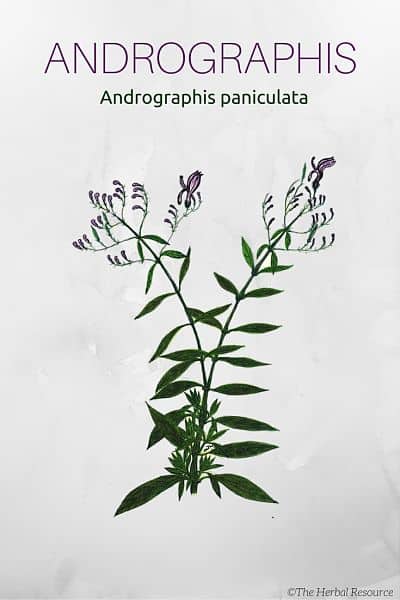
Plant Parts Used
The leaves and stems are used in herbal medicine.
The plant is usually ready for harvesting after three months or so when it is in bloom. The plant material is dried for later use in powdered form or as capsules, tea or tinctures.
Dosage and Administration
As a tea: Add one teaspoon of the dried andrographis leaves and one cup of boiling water in a teapot or infuser. Allow the infusion/tea to steep for 5 to 10 minutes. The tea is regarded to be most effective when sipped on an empty stomach.
Use 10 to 12 grams of the fresh herb’s leaves.
Up to 6 grams of dried herb per day may be used, but the bitter taste may challenge that amount for most users. To take the edge off some of the bitter taste, follow the tea with fresh fruit or dried cranberries.
A piece of licorice root can go a long way as a flavor additive.
Extracts of andrographis may be used in amounts of up to 400 mg twice a day for up to 10 days with standardized extracts of 5- to 6- percent andrographolide.
When using commercial products containing andrographis, the manufacturers’ instructions should be followed.
Possible Side Effects and Interactions of Andrographis
As with all herbal remedies use Andrographis paniculata with caution. Few side effects have been reported, making it safe for many users; there were some cases of itchy skin.
People with known gallbladder diseases should not use andrographis, nor should preparations containing the herb be used in people suffering from myasthenia gravis or those with high blood pressure or cardiac or kidney conditions.
Bitter herbs may also exacerbate existing ulcers or contribute to heartburn. Women who are pregnant, breastfeeding or anticipating becoming pregnant should not use this herb as it can act as an abortive.
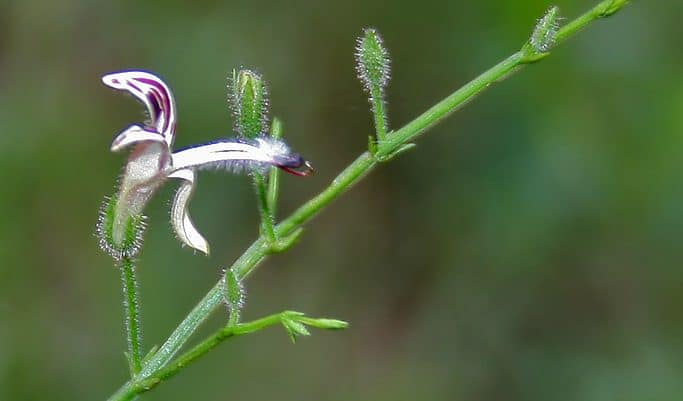
(Andrographis paniculata). Attribution: J.M.Garg
Other Common Names
- Green chirayta
- King of bitters
- India echinacea
- Chuan Xin Lian (Chinese)
- Kālamegha (Sanskrit)
- Quasabhuva (Arabic)
- Chooraita (Punjabi)
- Kirayat (Hindi)
Habitat
The plant is native to southern India and Sri Lanka, and is found in China, Thailand, India, and Pakistan and is also introduced and cultivated in the East and West Indies.
It is found in a variety of habitats, such as plains, hillsides, and coastlines. It is also found in disturbed and cultivated areas such as roadsides, farms, and wastelands.
Description
Andrographis paniculata is easily grown and considered an annual or biennial bush. It will grow in full sun or partial shade to a height of 18 inches to over 4 feet.
An erect shrub, andrographis is green with sparse lanceolate leaves up to 5 inches long on green stems. The leaves are scentless.
The shrub’s small flowers are tubular-shaped and white with pale violet streaks. The seeds are known to drop quickly if not harvested.
The whole plant has a bitter taste due to the pungent diterpenoid lactones, hence the name “king of bitters” in some places.
Supporting References
Caldecott, Todd: Ayurveda: The Divine Science of Life. Elsevier/Mosby 2006.
Blumenthal M. et al.: The Complete German Commission E Monographs: Therapeutic Guide to Herbal Medicines. Austin. American Botanical Council and Boston 1998.
NCBI -Experimental and Clinical Pharmacology of Andrographis paniculata and Its Major Bioactive Phytoconstituent Andrographolide.
Bensky D., A. Gamble, and T.Kaptchuk: Chinese Herbal Medicine Materia Medica Revised Edition. Seattle. Eastland Press 1993.
Nadkarni, A.K. and K.M. Nadkarni: Indian Materia Medica. Vol 1. Bombay, India. Popular Prakashan 1976.
Hindawi – Evidence-Based Complementary and Alternative Medicine. Volume 2013, Article ID 846740, 16 pages.
Coon J.T. and E. Ernst: Andrographis Paniculata in the Treatment of Upper Respiratory Tract Infections: A Systematic Review of Safety and Efficacy. Planta Med 2004.


Thordur Sturluson
Latest posts by Thordur Sturluson (see all)
- What is the Difference Between Hemp and Marijuana? - June 3, 2019

Thank you very much for this very detailed explanation of this plant,
I love reading all of your articles and wonder where can one purchase these herbs/plants?
Thanks for your feedback. There is already a link to Amazon in the article for one you can purchase. You can also use this:
https://www.amazon.com/s?k=Andrographis&tag=herbalsuppl0b-20
Thanks,
THR
Good morning I have EBV & my holiest Dr put me on Viracid last July. After 5 weeks of being on it I was feeling back to normal with no more muscle, neck,& back pain. I was more then happy until all my taste buds were gone & took 4 weeks to come back. I want to start it again but afraid it will happen again. Do you think Andrographis Paniculata Leaf Extract in the product viracid did this my Dr believes it was this because it happened to a couple of patients. Thank you for you help Regina.
Thank you for the article on Andrographis Paniculata. It has recently been proven in clinical trial in Thailand to kill SARS COV 2 virus. I because of high blood, eat 3 leaves a day. wondering how many leaves a day to eat to meet xx grams per day in extract ?? Dosing concern