Botanical Name: Cynara scolymus L
Other Common Names
- Globe artichoke
- Garden artichoke
- Ætiþistill (Icelandic)
- Artischoke (German)
- Artichaut (French)
- Chao xian ji (Chinese)
- Kronärtskocka (Swedish)
Habitat: The artichoke plant as it is known today is a cultivated form that probably derived from the artichoke thistle or the cardoon (Cynara cardunculus).
The Ancient Romans and Greeks knew the plant and cultivated it as a food crop in southern parts of Europe for centuries. It is believed that both the cardoon and the artichoke originated in Morocco or the Canary Islands.
Today, it is an important vegetable and is grown on a large scale in many areas of the world with temperate or subtropical climate, particularly in France, Italy, Spain, Belgium, and California in the United States.
The plant prefers a well-fertilized, humus-rich and moist soil. The plants are propagated by seeds or preferably with cuttings from the rootstock.
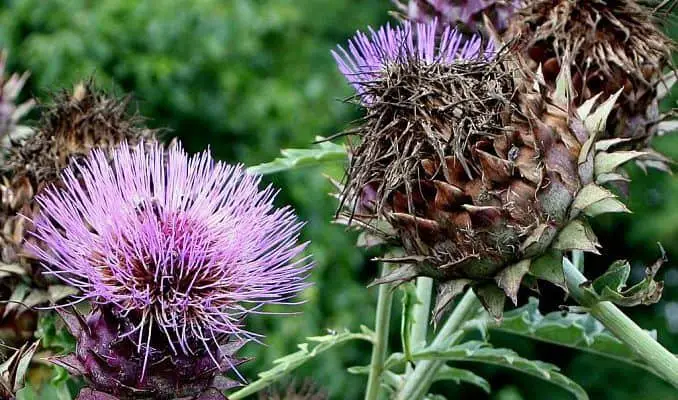
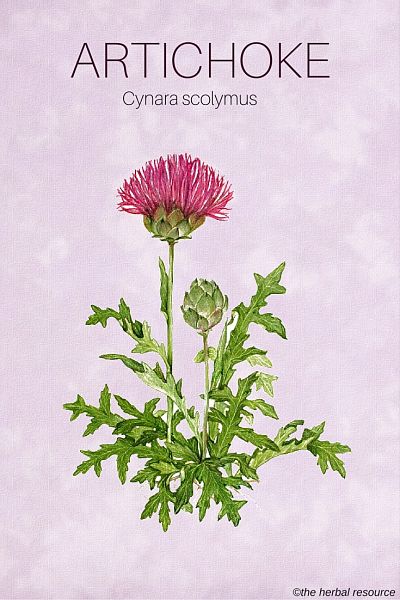
Description; Artichoke is a perennial plant of the sunflower family (Asteraceae) that can grow up to 2 meters (6.6 feet) in height. The stems are rough, wrinkled and branching, and the leaves are relatively large and are arranged alternately up the stem.
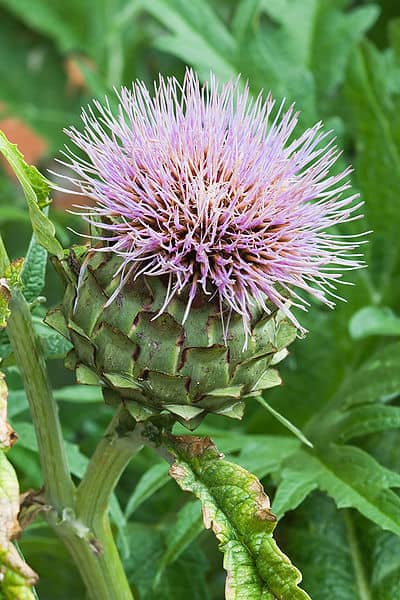
The leaves are dark green on top and gray below, with thorns along the edges. The large flower heads are a collection of small, blue-violet flowers.
The fleshy lower portions of the involucral bracts and the base of the buds are the edible part known as the “artichoke heart.” The plant flowers generally in July.
Plant Parts Used: The leaves are mostly used in herbal medicine both in dried or fresh form. The artichoke hearts are mainly used as food.
Therapeutic Uses, Benefits and Claims of Artichoke
The artichoke leaves contain a number of phenolic acids, flavonoids (rutin, luteolin), cynarin and sesquiterpenes (especially caryophyllene and beta-selinene).
It also contains tannins, sugar substances, inulin, mucus substances, phytosterols (taraxasterol), essential oil, provitamin A and several enzymes.
The herb is used internally as a tea or in tablet or capsule form to treat liver and gallbladder diseases such as liver damage, cirrhosis, hepatitis, and jaundice.
The bile driving and liver protective properties of artichoke are associated with substances cynarine and the chlorogenic and neo chlorogenic acids found in the plant. These substances are believed to protect the liver cells from damage caused by free radicals, heavy alcohol consumption, and other toxins. 1
Artichokes can also help prevent gallstones, and the German Commission E. recommends the use of artichoke in the prevention of recurrent gallstone problems.
It has also been used as an herbal remedy for indigestion, loss of appetite and dyspepsia with bloated feeling, intestinal gas, belching, nausea, irritable bowel syndrome, high cholesterol and obesity. 2
Clinical studies have indicated that artichoke can lower the values of triglycerides and cholesterol in the blood, which explains why the herb is commonly used to treat atherosclerosis. 3
Scientific studies also prove that artichoke prevents the oxidation of harmful LDL cholesterol, which is believed to play an important role in the development of arteriosclerosis.
Several clinical trials have shown that an artichoke extract can lower the amount of serum cholesterol and triglycerides, and some recent studies suggest that the herb may help improve relations between good (HDL) and bad (LDL) cholesterol. 4 5
It strengthens the absorption of nutrients from food and digestion of fat and can be used for constipation caused by poor liver function.
Also, the plant has a weak diuretic property and may lower elevated uric acid in the blood. Therefore it could be a helpful medicinal herb in treating rheumatic disorders such as osteoarthritis and gout. 6
Artichoke has been considered a good herbal supplement in the treatment of diabetes, since the herb may have a significant blood glucose lowering effect.
Dosage and Administration
Artichokes are used medically in the form of herbal teas, tinctures, tablets, and capsules.
- As a tea: One tablespoon of the dried crushed leaves in one cup of boiling water. The tea is then steeped for 10 minutes before it is strained. Drinking a cup a half hour before each meal is often recommended.
- As a tincture: 1:5 tincture (1 part herb for every five parts alcohol). 15 to 30 drops in some water half an hour before meals three times daily.
- As capsules: 320 mg capsules three times daily, or follow the manufacturer’s dosage instructions.
Possible Side Effects and Interactions
Artichoke is considered a safe herb to use as herbal medicine, and there are no reports of serious side effects when used in recommended doses.
There are no warnings against the use of the herb for pregnant and breastfeeding women, but it’s always better to consult a professional health-care provider before using herbs as medicine.
Other Good Resources on Artichokes
Supporting References
van Wyk, Ben-Erik: Food Plants of the World. Portland, Oregon. Timber Press 2006.
Salem, M.B., Affes, H., Ksouda, K. et al. Plant Foods for Human Nutrition – Pharmacological Studies of Artichoke Leaf Extract and Their Health Benefits (2015) 70: 441.
Atkins, Rosie, et al.: Herbs. The Essential Guide for a Modern World. London. Rodale International Ltd. 2006.
van Wyk, Ben-Erik & Michael Wink: Medicinal Plants of the World. Portland, Oregon. Timber Press 2004.
Blumenthal, Mark: Herbal Medicine: Expanded Commission E Monographs. Austin, Texas, American Botanical Council 2000.
Stuart, Malcolm: The Encyclopedia of Herbs and Herbalism. London, Orbis Publishing 1979.
Bown, Deni: The Royal Horticultural Society New Encyclopedia of Herbs & Their Uses. London, Dorling Kindersley 2002.
Skenderi, Gazmend: Herbal Vade Mecum: 800 Herbs, Spices, Essential Oils, Lipids Etc. Constituents, Properties, Uses, and Caution. Rutherford, New Jersey, Herbacy Press 2003.
Hershoff, Asa & Andrea Rotelli: Herbal Remedies: A Quick and Easy Guide to Common Disorders and Their Herbal Treatments. New York. Avery 2001.
Mills, Simon & Kerry Bone: The Essential Guide to Herbal Safety. St. Louis. Elsevier 2005.
Wang M, Simon JE, Aviles IF, Zheng HeK QY, Tadmor Y: Analysis of antioxidative phenolic compounds in artichoke (Cynara scolymus L.). J Agric Food Chem 51:601–608. 2003.
McCaleb, Robert, Evelyn Leigh & Krista Morien: The Encyclopedia of Popular Herbs. Roseville, California. Prima Health 2000.
Lucas, Richard M.: Miracle Medicine Herbs. Englewood Cliffs, New Jersey, Prentice Hall 1991.
Hershoff, Asa & Andrea Rotelli: Herbal Remedies: A Quick and Easy Guide to Common Disorders and Their Herbal Treatments. New York. Avery 2001.


Thordur Sturluson
Latest posts by Thordur Sturluson (see all)
- What is the Difference Between Hemp and Marijuana? - June 3, 2019

Leave a Reply