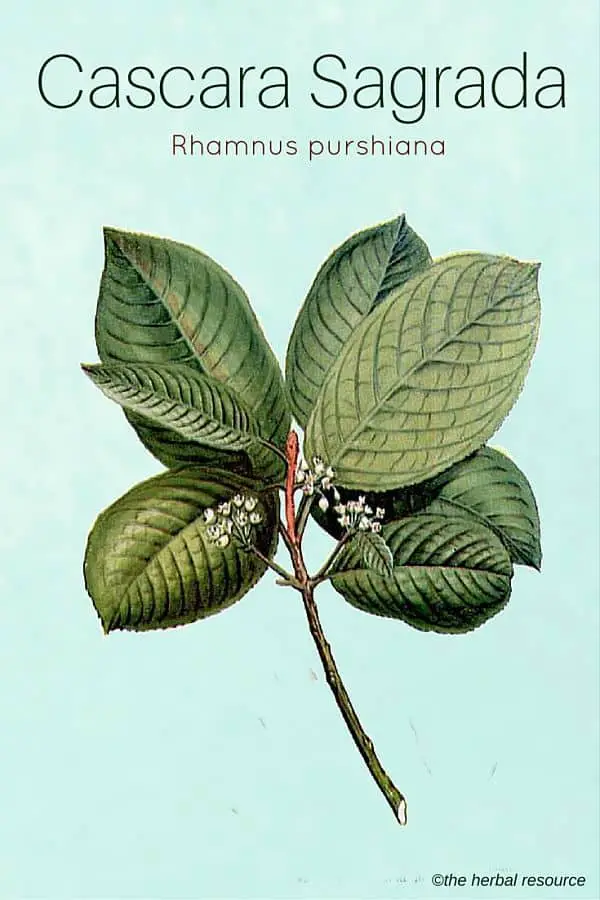
Botanical Name: Rhamnus purshiana.
The common name “cascara sagrada” means “sacred bark” in Spanish.
Other Common Names: Purshiana bark, Persian bark, chitticum, chittum bark rhamnus purshiana, cascara, California buckthorn, sacred bark.
Habitat: Native to the Pacific Northwest from Canada to California and it is commonly cultivated in Kenya and parts of North America.
Cascara sagrada grows mainly in moist, acidic soil. It is most commonly found on the edges of deciduous forests or on the shady side of clearings.
Plant Description: This tree grows to approximately 20 feet tall. It is characterized by reddish-brown bark and thin leaves that range from 3-5 inches long with finely serrated edges.
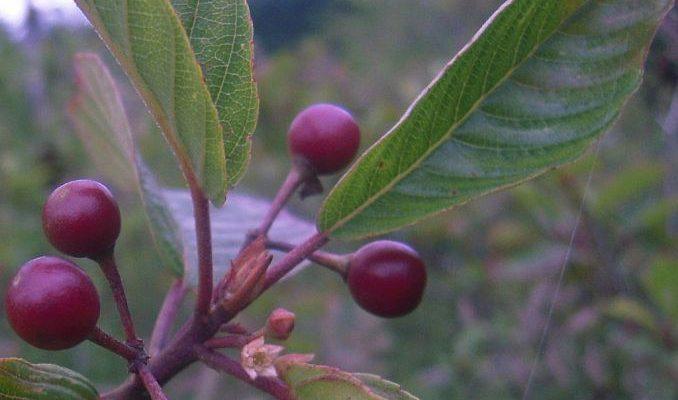
This tree yields berries that are red when young and ripen to purple or black. Each fruit contains three seeds.
Plant Parts Used
The bark. Before the bark is used for medical purposes it should be allowed to age for one year. Usually, a three-year-old bark is preferred because it exhibits a milder cathartic activity.
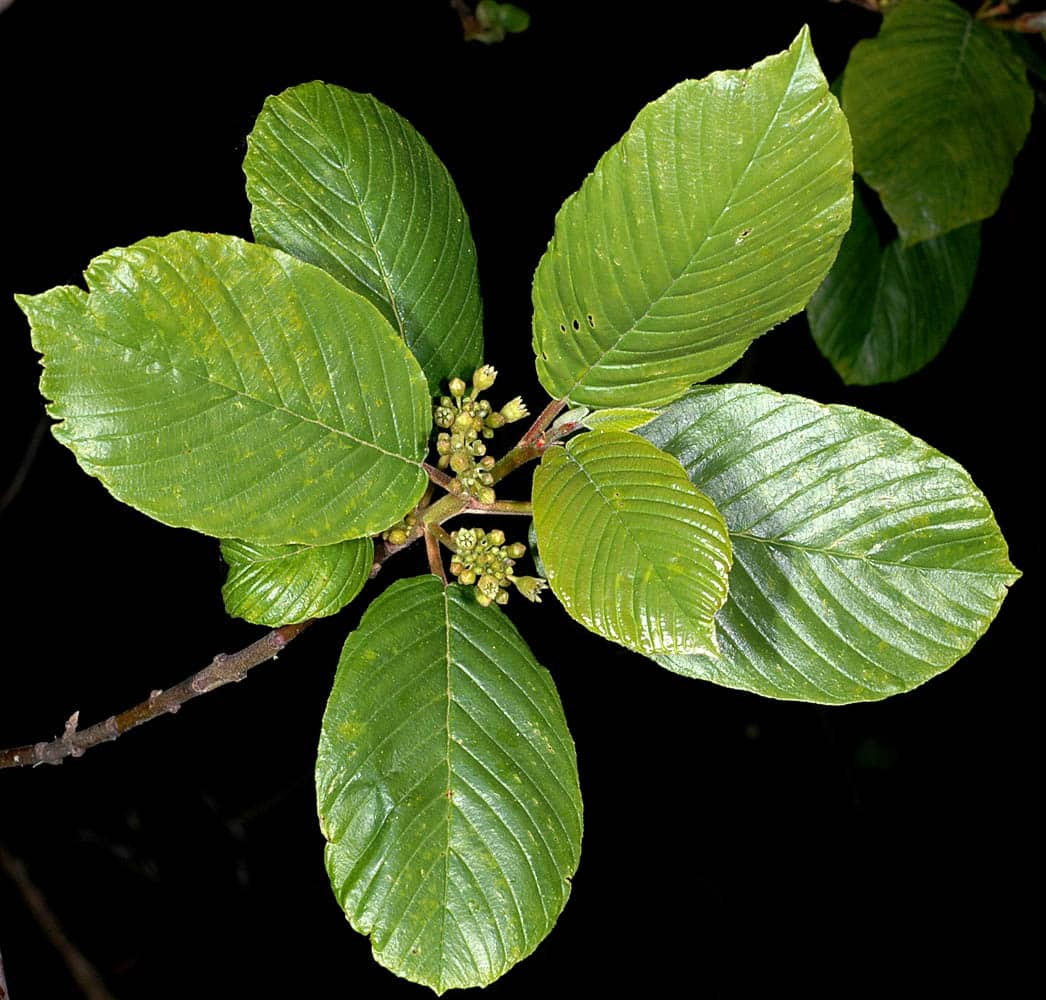
(Rhamnus purshiana) – Attribution: Gerald D. Carr
Therapeutic Uses, Benefits and Claims of Cascara Sagrada
It was used traditionally as an herbal laxative by various Native American Indian tribes. These tribes passed their knowledge of this medicinal herb then on to the Spanish explorers.
The active constituents in cascara sagrada are hydroxyanthraquinone glycosides called cascarosides. These cascarosides have a cathartic effect by inducing muscular contraction called peristalsis in the large intestine, encouraging a bowel movement.
Cascara sagrada is the main ingredient in many laxative products on the market today and it is thought to be the most effective herb for colon cleansing available.
It is mild enough to use after anal or rectal surgery or for use in the elderly. Because of its mild laxative properties, this herb is often used for treating chronic constipation.
Cascara sagrada increases the secretion of bile from the gallbladder. Because of this property, cascara sagrada has been used to break up and prevent gallstones.
The FDA places cascara sagrada in category I, meaning that it is considered safe and effective as a laxative and the German Commission E has approved its use for treatment of constipation.
Traditionally it is thought to heal ailments of the liver. Taken internally, it has been used to treat liver problems such as an enlarged liver.
When properly aged, cascara sagrada is useful for soothing upset stomachs.
Improves the flow of secretions from the pancreas, stomach, and liver to promote digestion and aid in elimination.
Cascara sagrada is thought to act as a natural antibiotic in the intestines when taken internally and it has been used to help eliminate gastrointestinal parasites such as worms.
It is thought to relieve the pressure and pain associated with hemorrhoids and anal fissures but this claim is only supported by traditional use.
Dosage and Administration
Cascara sagrada must be aged before use as a laxative. Alternatively, the bark can be artificially aged by heating and drying.
Always start with a low dose and increase as needed, depending on the reaction to the herb.
Drink plenty of water along with each dose. The liquid extract should be taken 2-3 times per day when needed, approximately one teaspoon per dose.
The dried bark can be purchased in capsule form and the dosage specified on the labeling should be followed. Consult a physician for confirmation regarding optimum dosage for each form of the herb.
For an at-home remedy for constipation or gallstones, mix four teaspoons of dried bark with one quart of boiling water. Let the solution sit for one hour to ensure that the herb powder is completely dissolved. Drink ½ cup to 1 cup 2-3 times per day when needed, not exceeding two cups per day. This remedy is most effective when taken on an empty stomach, allowing for the herb to act quickly.
Tinctures can be used instead of a tea-like solution. The recommended dosage is 15-30 drops to replace every cup of solution, though the lowest effective dose should be used.
Because it is a very bitter herb, honey or sugar may be added to a cascara sagrada solution to make it more palatable. Additionally, herbs such as anise can be added to further counteract the unpleasant flavor.
Side Effects and Possible Interactions of Cascara Sagrada
Fresh cascara sagrada will cause gastrointestinal irritation, resulting in nausea, vomiting, diarrhea, and intestinal spasms.
The bark should be obtained from trusted sources to ensure proper aging; it should be aged for at least a year, or baked in an oven for several hours at 250 degrees until completely dry.
Do not use the herb if there are existing ulcers, colitis, or any other gastrointestinal conditions. Use caution if pregnant or nursing.
As with any herbal supplement or remedy, consult a qualified physician before using cascara sagrada.


Thordur Sturluson
Latest posts by Thordur Sturluson (see all)
- What is the Difference Between Hemp and Marijuana? - June 3, 2019

I have used this herb and found it to be very good.