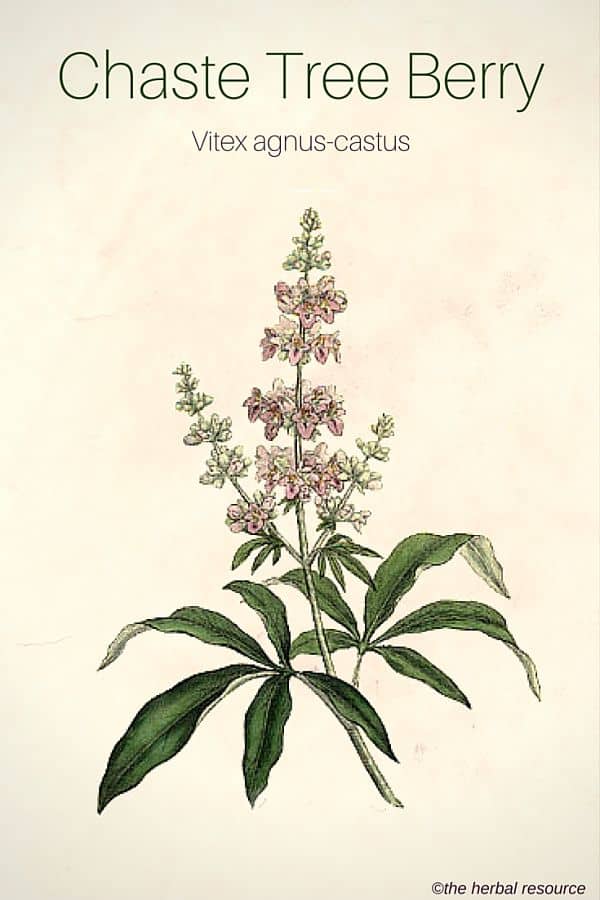
Botanical Name: Vitex agnus-castus.
Other Common Names: Chaste Tree, Abraham’s balm, monk’s pepper, chaste lamb-tree, safe tree, Indian-spice, wild pepper, chasteberry, vitex, agnus-castus, sauzgatillo (Spanish), gattilier agneau-chaste (French), kyskhetsträd (Swedish), Keuschbaum (German), munkapipar (Icelandic).
Habitat: The chaste tree is native to the Mediterranean region but is regularly cultivated in warm, temperate and sub-tropical climates.
It will grow in full sun to partial shade in well-drained soil. The tree may survive in cool coastal climates but may not bear fruit since it needs summer heat to do so.
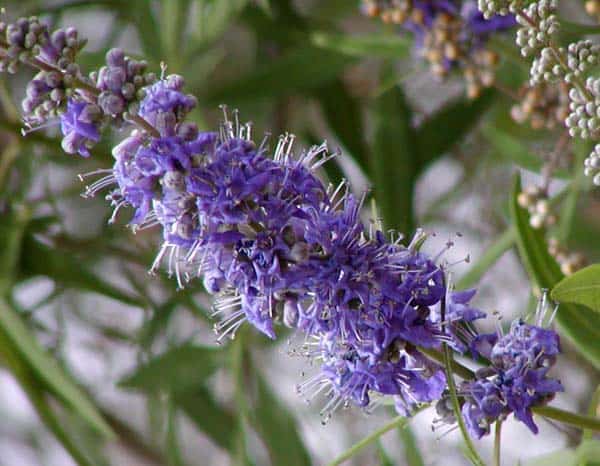
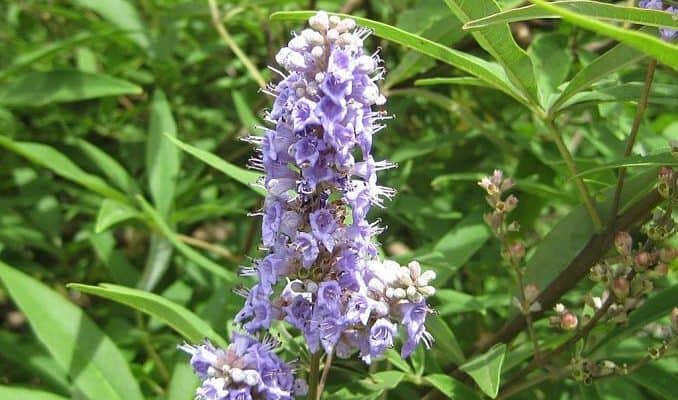
Plant Description: The chaste tree is a flowering shrub that grows to a height of 1 to 5 meters. The tree produces a spray of beautiful flowers ranging from lilac to blue and white.
The flowers bloom in late summer or early fall. The plant has a pleasing aromatic quality.
Plant Parts Used: The fruit/berries, leaves, tender stem parts, and leaves are all used from this plant.
Therapeutic Uses, Benefits and Claims of Chaste Tree Berry
Chaste tree (Vitex agnus-castus) got its name from the anti-aphrodisiac quality purported since its early use.
Monks used to chew the berries and leaves of this tree to reduce the urges of the flesh. This use is not scientifically proven, but it has deep roots traditionally.
Syrup of the berries was even given at convents to nuns to reduce the chances of succumbing to sexual desires.
This plant has been used for menstrual difficulties for over 2500 years, with its earliest uses documented during early Roman and Greek history.
The berries contain various alkaloids and flavonoids, as well as substances that are precursors of steroidal hormones.
Studies have indicated that the health properties of the herb are not due to only one substance in particular but to several compounds interacting together.
Modern uses of chaste tree berry include reduction of premenstrual syndrome (PMS), menstrual cramps and other pre-menopausal symptoms.
Studies have shown a reduction in breast tenderness and pressure, headaches, bloating and fatigue in women who took the herb regularly and over some time.
Vitex agnus-castus is often used in combination with other herbs depending on the ailment. It can be used with black cohosh (Cimicifuga racemosa) or golden seal (Hydrastis canadensis) to treat PMS and menopause symptoms.
In conjunction with echinacea (Echinacea sp.) it is often used to treat acne caused by hormone imbalances and with feverfew (Tanacetum parthenium) for menstrual migraine.
This herb has also been used to increase stimulation of breast milk production.
Chaste tree berries are used as an herbal treatment for infertility associated with mild corpus luteum insufficiency.
This plant may also be beneficial in combating breast cancer
Chaste tree berry has been shown to help balance the progesterone and estrogen levels. This is why it has been referred to as a “female” herb.
Based on traditional use, it may have a negative effect (anti-androgenic) on male hormones and could reduce the sex drive. Something most men are not very keen on.
The berries can be dried and used as a substitute for pepper. They are also used in various spice blends in the Middle East.
The aromatic leaves can be used as a seasoning. The plant is one of the ingredients in a legendary Moroccan spice blend called “ras el hanout”.
A perfume is made from the flowers. The young stems have been used to make baskets and a yellow plant dye can be obtained from the leaves, seeds, and roots.
Dosage and Administration
Chaste tree berry does not give immediate results and must be used over a long period of time.
In most cases, the herb should be used for four to six months to obtain the desired effect.
The leaves, flowers, and berries can be used in a decoction, traditional tincture, cider vinegar tincture, syrup, elixir, or just eaten right off the tree.
It is also available in capsule and tablet form as well. The common dose of this supplement is 40 drops of the liquid extract daily, usually in a single dose.
Whenever taking an herbal supplement it´s important to heed the manufacturer’s dosing advice.
Possible Side Effects of Chaste Tree Berry
Although deemed safe through numerous studies, chaste tree berry use has shown some mild side effects. These include gastrointestinal discomfort, diarrhea, nausea, transitory headaches, and mild skin reactions.
This plant does not show any interaction with other herbs or medication, but due to its hormonal influences, it should not be taken in conjunction with other female hormonal medications without consulting a physician or herbal practitioner.
Supporting References
Williamson, Elisabeth M.: Potter’s Herbal Cyclopaedia. Essex, England. Saffron Walden 2003.
Barnes, Joanne; Linda A. Anderson & J. David Phillipson: Herbal Medicines. A Guide for Healthcare Professionals. 2nd Ed. London, Pharmaceutical Press 2002.
Blumenthal, Mark (senior editor): The ABC Clinical Guide to Herbs. Austin, Texas. American Botanical Council 2003.
van Wyk, Ben-Erik & Michael Wink: Medicinal Plants of the World. Portland, Oregon, Timber Press 2004.
Atkins, Rosie, et al.: Herbs. The Essential Guide for a Modern World. London, Rodale International Ltd. 2006.
Foster, Steven: Herbs for Your Health. A Handy Guide for Knowing and Using 50 Common Herbs. Loveland, Colorado, Interweave Press 1996.
Duke, James A.: The Green Pharmacy Herbal Handbook. Rodale / Reach 2000.
Schar, Douglas: The Backyard Medicine Chest. An Herbal Primer. East Sussex, England. Elliott & Clark Publishing 1995.


Thordur Sturluson
Latest posts by Thordur Sturluson (see all)
- What is the Difference Between Hemp and Marijuana? - June 3, 2019

When taking the Vitex (Chaste Tree Berry) Tincture is it common for it to burn the throat as it goes down? I can deal with horrible taste but the burning makes it a struggle to take.
It seems to be common. Some people add small amount of milk to the tincture to minimize the “throat burn” sensation.