Botanical Name: Coriandrum sativum.
Other Common Names: Cilantro, culantrillo, dhania, Chinese parsley. The seeds are usually known as coriander while the leaves are called cilantro.
Habitat: Coriander is indigenous to the Mediterranean countries and today most of the commercial supply of the herb comes from Morocco, Romania, and Egypt.
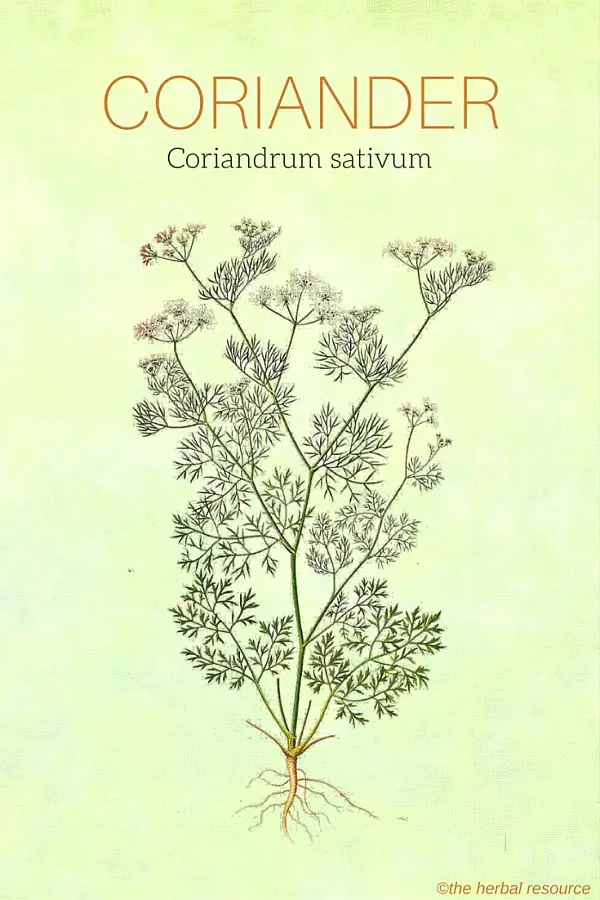
Plant Description: Coriander is aromatic annual plant of the parsley family (Apiaceae). It has slender stems with two types of lobed leaves and can grow up 90 cm or 3 feet tall.
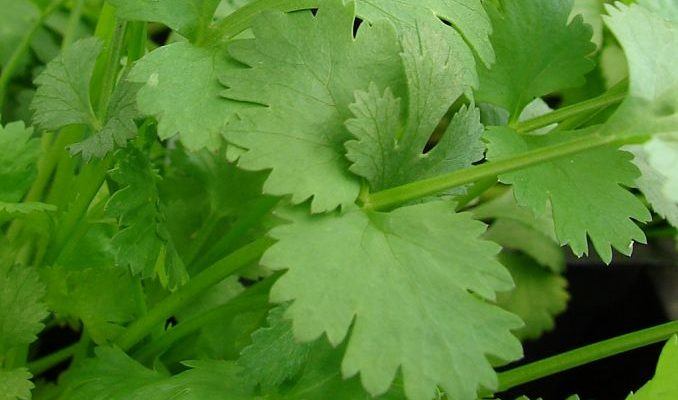
The leaves at the base are broad and resemble Italian parsley while the leaves on the stems are slender and feathery.
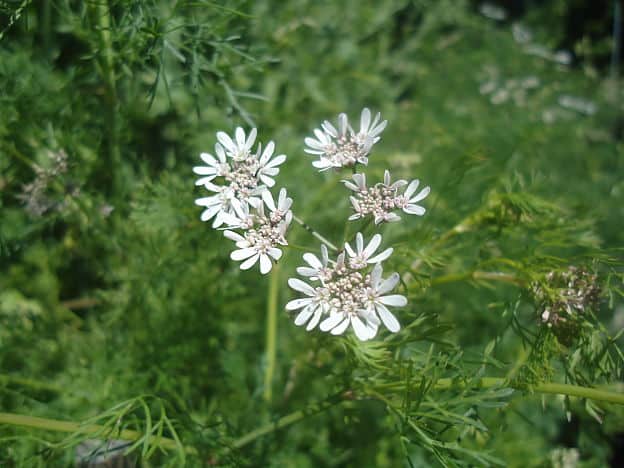
The flowers are white with a hint of purple formed in clusters followed by round, ribbed, light brown seeds. The seeds have a pleasant aroma while the leaves have a stronger almost pungent odor.
Plant Part Used: Seeds, oil and leaves.
Therapeutic Uses, Benefits and Claims of Coriander
Both the [easyazon_link identifier=”B001A1VIUO” locale=”US” tag=”herbal-resource-20″]seeds[/easyazon_link] and leaves (cilantro) of coriander have been used in cooking for millennia, and coriander is considered one of the oldest spices in the world, probably dating as far back as 5000 b.c. Today, it is a major component in various traditional ethnic cooking.
Traditionally, it is used to treat digestive and gastric complaints, small pox, nausea, anemia, fevers, measles, colds and hernias.
This herb is a good source of dietary fiber. The coriander leaves contain minerals like iron, magnesium, and manganese and they are also rich in vitamins A, B, and C.
Due to cineole, a phytochemical found in coriander thought to have an anti-inflammatory effect, it is been used as an herbal remedy for many symptoms associated with arthritis.
Coriander is considered a natural treatment for high cholesterol levels. There is some indication that the acids (linoleic acid, oleic acid, palmitic acid, stearic acid, and ascorbic acid) found in coriander might help to lower bad cholesterol (LDL) and raise good cholesterol (HDL).
The herb can be used as a treatment for diarrhea because of chemicals found in the essential oil. These chemicals (alpha-pinene, beta-phelandrene cineole, borneol andlimonene) have both antibacterial and antifungal properties.
The essential oil of coriander has antiseptic properties and has been used to treat mouth ulcers.
It has a reputation as an appetizer and has been used to increase appetite in those suffering from anorexia. It is thought to improve digestion and help in the secretion of enzymes and digestive juices found in the stomach.
Conjunctivitis is another ailment that’s treated by this herb due to its disinfectant and antimicrobial qualities.
Some animal studies indicate coriander can effectively stimulate the secretion of insulin and lower high blood sugar. These qualities could make it a good herbal supplement for diabetes treatment.
The vitamin K also found in the plant is thought to be help people who have osteoporosis. The vitamin K may prevent activation of cells called osteoclasts that cause bone loss.
Dosage and Administration
Licensed herbalists often recommend the following daily dosage.
A daily dose is usually 3.0 g.
As an infusion: 1 cup between meals.
As a fluid extract: Usually 5 to 30 drops.
For commercial products of coriander always follow the manufacturer’s instructions.
Possible Side Effects and Interactions of Coriander
As a medicinal herb, coriander is usually considered safe.
Because of the volatility of the seeds, they may cause an allergic reaction and some people may experience dermatitis after handling the leaves.
Breastfeeding and pregnant women should not use excessive amount of this herb.
Other Good Resources on Coriander
Supporting References
Williamson, Elisabeth M.: Potter’s Herbal Cyclopaedia. Essex, England. Saffron Walden 2003.
Volák, Jan & Jiri Stodola: The Illustrated Book of Herbs. London. Caxton Editions 1998.
Sellar, Wanda: The Directory of Essential Oils. London, Vermilion 2005.
Atkins, Rosie, et al.: Herbs. The Essential Guide for a Modern World. London, England. Rodale International Ltd. 2006.
Bown, Deni: The Royal Horticultural Society New Encyclopedia of Herbs & Their Uses. London, England. Dorling Kindersley 2002.
Duke, James A.: Herbs of the Bible. 2000 Years of Plant Medicine. Loveland, Colorado. Interweave Press 2000.
Rose, Jeanne: 375 Essential Oils and Hydrosols. Berkeley, Frog, Ltd. North Atlantic Books 1999.
Stuart, Malcolm: The Encyclopedia of Herbs and Herbalism. London, England. Orbis Publishing 1979.


Thordur Sturluson
Latest posts by Thordur Sturluson (see all)
- What is the Difference Between Hemp and Marijuana? - June 3, 2019
Leave a Reply