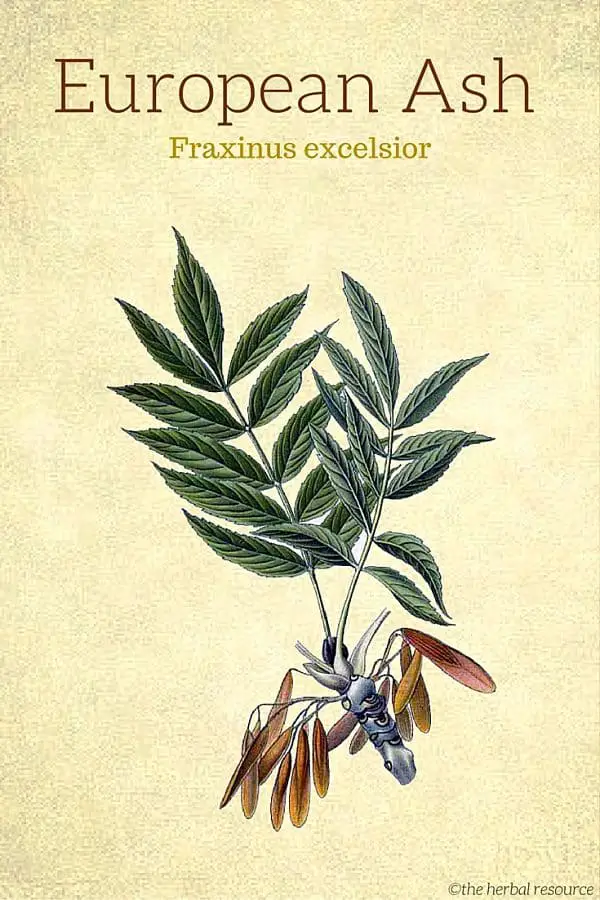
Botanical Name: Fraxinus excelsior.
Other Common Names: Ash, common ash, weeping ash, bird’s tongue.
Habitat: The European ash is found in most parts of Europe from the Mediterranean Sea in the south to Norway in the north and to the Caucasus and western Russia in the east.
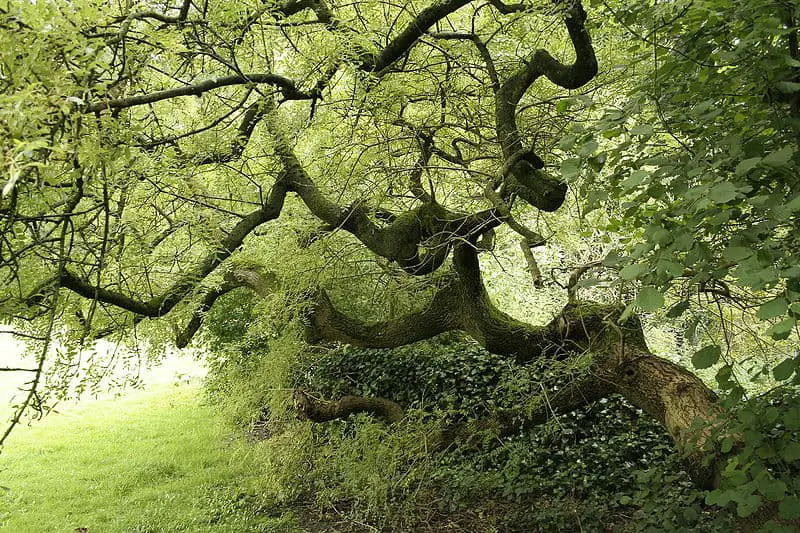
Description: European ash is a large tree that can grow up to 40 meters. The ash is long-lived with the normal age around 200 years, but there are some trees that are older than 500 years.
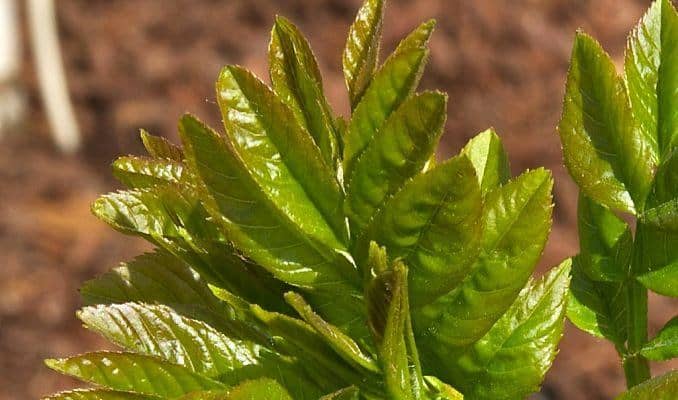
The leaves appear very late in the spring, sometimes after the beginning of June and fall again in the early autumn.
The small flowers are reddish-brown to black and lack normal petals. The ash does not flower until it has reached 30 years. Some trees have female flowers while others have male flowers or even both. The ash is also known to change its sex from year to year.
The ash trees are usually pollinated by the wind, and the seeds are dispersed in the same way.
Plant Parts Used: The bark and leaves and sometimes the seeds.
Therapeutic Uses, Benefits and Claims of European Ash
There’s a very long historical tradition of using European ash as a medicine. Its uses as a medicinal herb were already known by the Greek physician Hippocrates (460-377 B.C.).
St. Hildegard of Bingen (1098 – 1179), a German writer, composer and philosopher, writes of using ash as a treatment for gout and rheumatism.
European ash contains many substances known for their medicinal benefits. The leaves, bark and young twigs contain coumarins (fraxin, esculin, and related substances) that inhibit the growth of bacteria and fungi.
These properties could make the ash beneficial as a treatment for healing wounds and sores and to reduce swelling.
The ash bark is used as a fever-reducing agent and as a substitute for quinine, which is derived from the quinine tree (Cinchona pubescens).
The bark and leaves have been used traditionally as an herbal remedy for diarrhea.
The substance fraxin found in the bark and the leaves have diuretic properties and may increase the excretion of uric acid.
Due to these properties the bark could help treat gout in the elderly and may also be beneficial for other rheumatic disorders, such as osteoarthritis and rheumatoid arthritis.
Ailments associated with the bladder and kidneys are also treated with the bark. Additionally, it is used to remove stones in the urinary tract.
The bark and the leaves of the ash tree may act as a mild laxative due to the presence of mannitol and can, therefore, be used as an herbal remedy for constipation and to eliminate intestinal parasites. However, compared with other laxative herbs, the effect is rather weak.
The Vikings considered the ash a sacred tree. In Norse mythology, the ash Yggdrasil was an immense tree that was the center of the world and spread its crown over the whole earth. It was said it was the world tree around which the nine worlds existed.
Dosage and Administration
Herbalists sometimes recommend the following dosages.
As an infusion – one or two teaspoons of ground leaves to a cup of hot water. Steeped for 2 to 3 minutes and then strained. Drink one to two cups a day.
As a decoction – one teaspoon of bark powder to a cup of water. Boiled briefly and then steeped for 2 to 3 minutes. Drink one cup daily. For a more appealing taste add peppermint or sweet marjoram.
The leaves should be picked in early summer when they are glazed by a thin mucous membrane. Then, dried and stored in an airtight container.
Best is to collect the bark in the spring, then dry it and grind into a powder. The seeds should be harvested while they are young and green.
Possible Side Effects and Interactions European Ash
There are no registered side effects when European ash is used as an herbal medicine.
Ash can cause allergic reactions in some people. Cases of allergy to the pollen have been reported, but are considered uncommon.
Other Good Resources on European Ash
Supporting References
Volák, Jan & Jiri Stodola: The Illustrated Book of Herbs. London. Caxton Editions 1998.
Mills, Simon: The Dictionary of Modern Herbalism. New York. MJF Books 1988.
Príhoda, Antonín, Ladislav Urban & Vera Nicová: The Healing Powers of Nature. Leicester, England. Blitz Editions 1998.
van Wyk, Ben-Erik & Michael Wink: Medicinal Plants of the World. Portland, Oregon. Timber Press 2004.


Thordur Sturluson
Latest posts by Thordur Sturluson (see all)
- What is the Difference Between Hemp and Marijuana? - June 3, 2019

Leave a Reply