Botanical Name of Fennel: Foeniculum vulgare.
Other Common Names: Large fennel, sweet fennel, wild fennel, sweet cumin, finnochio, fänkål (Swedish), hinojo (Spanish), Fenchel (German), fennikel (Danish), hui-hsiang (Chinese), fenouil (French), fennika (Icelandic).
Habitat: Fennel is circumpolar (that is, can be found all over the globe). It is most often found in dry stony calcareous soils near the sea.
It is generally considered native to the Mediterranean region but today it is cultivated throughout the British Isles, China, Dominican Republic, Ethiopia, Haiti, Iraq, Italy, Japan, Kurdistan, Malaya, Mexico, Spain, Turkey, and Venezuela.
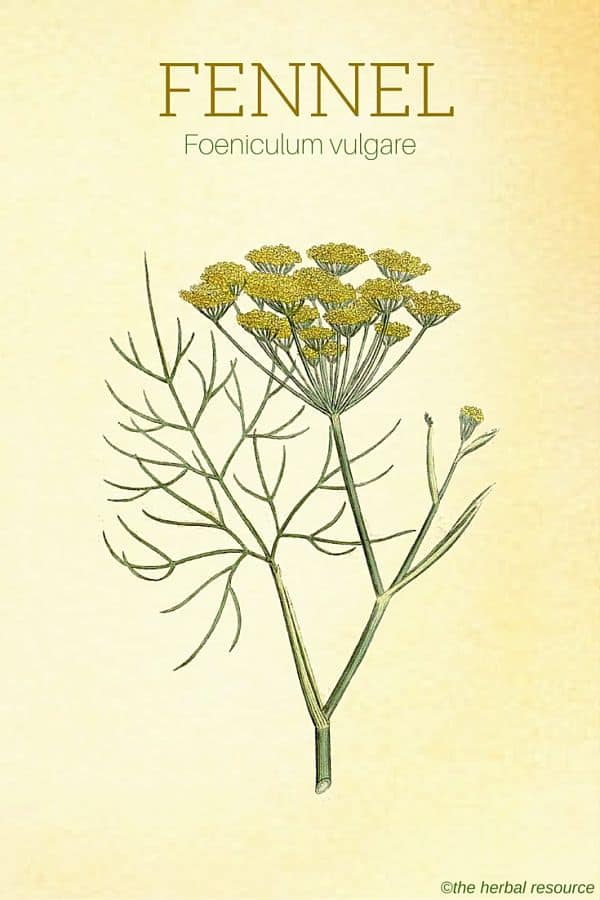
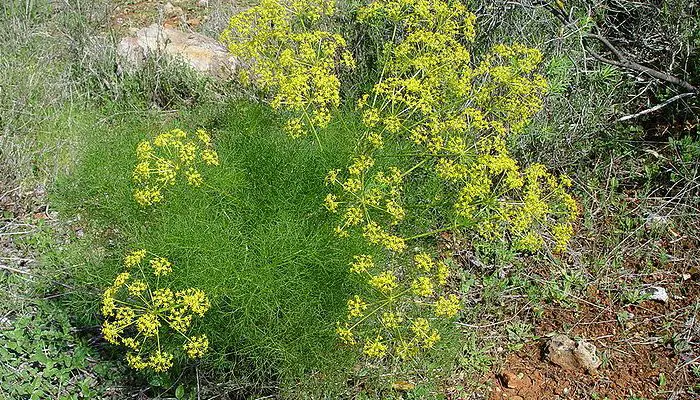
Plant Description: Fennel is a perennial herb that grows to a height of about 2.5 m.
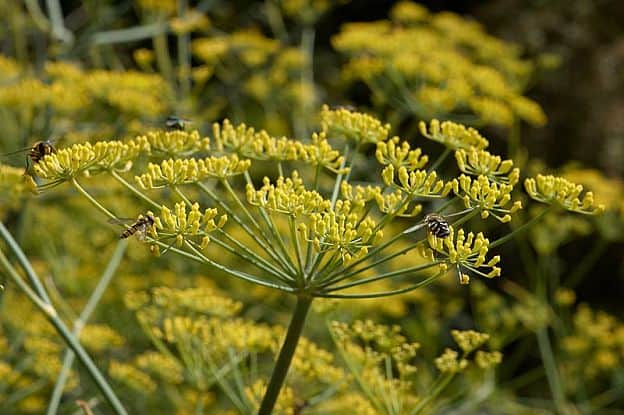
It has hollow stems, feathery leaves, and flowers that grow in terminal compound umbels about 5-15 cm wide. Each umbel has 20-50 tiny yellow flowers on short pedicels. The leaves are finely dissected, growing up to 40 cm long; the appearance of the leaves is similar to dill leaves but thinner.
The fruit, which is the part most often used in herbal medicine, is a dry seed measuring 4-10 mm long, twice as long as it is wide, with distinct grooves.
Plant Parts Used: Primarily the seeds and an essential oil extracted from them; leaves and root are also used.
The fresh leaves, mostly used as a seasoning and garnish, are not suitable for drying but can be preserved by freezing.
The essential oil is colorless or pale yellow and has a sweet, spicy fragrance reminiscent of anise. The oil is extracted by steam distillation of the crushed seeds.
Benefits and Claims of Fennel
The health properties of fennel are warming, carminative, antispasmodic, antidepressant, stomachic, pectoral, diuretic, diaphoretic, aromatic, anti-microbial, pain reducing, fever reducing, and promotes milk-flow in nursing mothers.
Fennel has a long history as a commonly used household remedy for a variety of complaints, especially digestive disorders and it has been used traditionally as a remedy for gas, acid stomach, irritable bowel syndrome (IBS), gout, motion sickness, cramps, and spasms.
Fennel has a diuretic effect, which increases the amount and frequency of urination, which is thought to help remove toxic substances from the body.
Fennel is thought to be an effective herbal remedy for respiratory congestion and is a common ingredient in cough remedies.
It relaxes the smooth muscle lining of the digestive system and is used for cancer patients after radiation and chemotherapy treatments to help rebuild the digestive system.
Fennel is used as a natural treatment for anemia. Fennel contains iron and histidine, an amino acid found in fennel. Histidine stimulates the production of hemoglobin and other components of the blood.
It is common practice, especially in India, to chew fennel seeds after a meal. Some of the components in the plant stimulate secretion of digestive and gastric juices, reduce inflammation of the digestive tract and facilitate proper absorption of nutrients.
Fennel is used as an herbal treatment for diarrhea caused by bacterial action; it is believed that the properties of some components of it are disinfectant and anti-bacterial. Histadine is an example of one of the several amino acids in fennel that aid digestion, helping to relieve diarrhea due to indigestion.
The tea is believed to increase milk production in nursing mothers, and may also relieve colic in babies. An infusion of the bruised seeds is a safe and effective natural treatment for flatulence in babies.
When used with urinary disinfectant herbs like arctostaphylos uva-ursi, the herb is thought to be an effective herbal treatment for cystitis.
The plant is rich in phytoestrogens, and is an emenagogue, easing and regulating menstruation by regulating hormonal action in the body. It is believed to be helpful as a natural treatment for amenhorrea, anxiety and depression.
The ground seed of fennel is made into a tea and taken as a treatment for the symptoms related to snake bites, insect bites or food poisoning. This application is a complementary remedy for symptoms, and must never replace appropriate medical care.
A gargle made from fennel infusion is used as an herbal remedy for relief of hoarseness and sore throats.
The essential oil may be used topically to ease muscular and rheumatic pain and an infusion (steeped tea) of the fennel seeds may be used to prepare a compress as a treatment for conjunctivitis and inflammation of the eyelids.
Besides being used in cooking, fennel is found in many commercial products such as toothpaste, soaps, perfumery, air fresheners, and antacid preparations.
The dried plant is used as an insect repellent; the crushed leaves are used as a flea repellent for dogs and the dried leaves are believed to help keep fleas away from kennels and stables.
Dosage and Administration
Infusion: pour 1 cup boiling water over 1-2 teaspoonfuls of slightly bruised fennel seeds and steep for 10 minutes. Drink up to three times a day. For flatulence, take a cup ½ hour before each meal.
Side Effects of Fennel
Pregnant women should not take fennel as a medicinal herb internally as it is a uterine stimulant; however, small amounts used in cooking are safe. Skin contact with the sap or essential oil may cause photo-sensitivity or dermatitis in some people.
Ingestion of the essential oil can cause vomiting, seizures and pulmonary edema.
While fennel has a long history of use as a useful herbal remedy, it does contain compounds which are anti-bacterial. Keep in mind that too much of anything can be harmful.
Taken in excess, fennel can induce trouble in breathing, increase palpitations and make heartbeats irregular. Taken in excess, it may also cause neurotic problems.
It is essential to consult a health care professional when altering medications and thoroughly investigate how conventional and herbal medications may interact with each other.
Inform a health care professional of any medications, vitamins or herbs that are currently being used.
It should be kept in mind that herbs may still produce side effects or may carry some element of risk (although side-effects and risks are generally less common and serious than in synthetic drugs).
Any applicable precautions and contraindications should be clearly understood. Carefully research and select a reputable sources when buying herbs, and always read the label for ingredients, instructions and warnings.
Supporting References
Williamson, Elisabeth M.: Potter’s Herbal Cyclopedia. Essex, Saffron Walden 2003.
Balch, Phyllis A.: Prescription for Herbal Healing. New York, Avery 2002.
Tilgner, Sharol: Herbal Medicine. From the Heart of the Earth. Cresswell, Oregon. Wise Acres Press 1999.
Bensky, Dan & Andrew Gamble: Chinese Herbal Medicine. Materia Medica. Seattle, Washington, Eastland Press Inc. 1993.
Bown, Deni: The Royal Horticultural Society New Encyclopedia of Herbs & Their Uses. London, Dorling Kindersley 2002.
Tierra, Lesley: Healing with the Herbs of Life. Berkeley, Crossing Press 2003.
Duke, James A.: The Green Pharmacy Herbal Handbook. Rodale / Reach 2000.
Roybal, Beth Ann Petro & Gayle Skowronki: Sex Herbs. New York, Gramercy Books 2002.
Foster, Steven: 101 medicinal herbs. Loveland, Interweave Press 1998.
Reid, Daniel: A Handbook of Chinese Healing Herbs. Boston, Shambhala 1995.
Hoffmann, David: The New Holistic Herbal. Boston, Element Books Ltd. 1990.
Mills, Simon & Kerry Bone: The Essential Guide to Herbal Safety. St. Louis, Elsevier 2005.


Thordur Sturluson
Latest posts by Thordur Sturluson (see all)
- What is the Difference Between Hemp and Marijuana? - June 3, 2019

Leave a Reply