Medicinal herbs for colic relief are also some of the most commonly used herbs in cooking, aperitifs and herbal teas.
A good herbal colic remedy will be gentle in its action and works by improving digestion, relieving spasm, restoring balance to the digestive tract and by stimulating peristalsis.
Peristalsis is the natural wave-like motion that occurs in the digestive tract. This ripple action moves contents along by contracting and expanding; in the stomach, this process is what mixes food with digestive juices for maximum absorption of nutrients in the gut.
The cause of colic can be many including food intolerance, allergies, and overeating.
Colic is a common ailment that affects most people at some point but it can be painful, and in infants, it can lead to sleepless nights for all the family.
The best way to take herbs for colic relief is either as a tea or as an herbal remedy known as ‘colic water’.
While it is just as effective to use fluid extracts, it may be easier to make up an herbal tea with a slice of fresh ginger to ease mild colic.
Before using an herbal colic remedy, ensure that any other digestive illnesses are ruled out, such as ulcers or appendicitis.
Persistent pain that is not relieved by medication should be thoroughly investigated before continuing an herbal colic treatment.
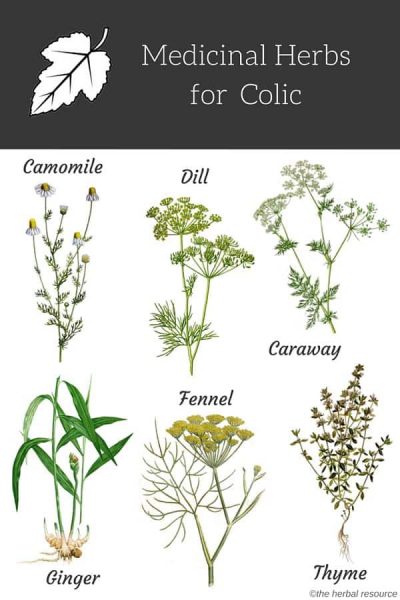
Medicinal Herbs for Natural Colic Remedy and Relief
Chamomile
Chamomile flowers (Matricaria recutita/chamomilla or Anthemis nobilis) have been used for hundreds of years to treat dyspepsia (painful digestion), colic, motion sickness, and gastritis.
This herb is a well know anti-spasmodic and contains the triterpenoids, bisabolol, and azulene; which reduce cramping and inflammation in the gastrointestinal tract.
Chamomile has also found its way into many skin care preparations as well as being recommended as a treatment for gastric and duodenal ulcers, and as mouthwash due to its anti-inflammatory action.
As an herbal remedy for colic the azulene in chamomile will not only stimulate peristalsis, it will also act to reduce irritation in the gut and has recently gained interest for its antimicrobial effects on some gastrointestinal bacteria.
Chamomile is indicated when there is there is distension of the abdomen and can be taken as a tea or fluid extract.
Dill, Caraway, and Fennel
Dill (Anethum graveolins), caraway (Carum carvi and fennel (Foeniculum vulgare) are highly aromatic due to their essential oil. They all have similar actions in that they stimulate digestion and have the added benefit of acting as an antimicrobial.
This action helps to ease diarrhea associated with mild infection in the gut. Also, all essential oils improve digestion as they reduce spasm and improve peristalsis.
Dill, caraway, and fennel are also indicated for treating hiccups, reflux, and colic where there is an inflamed gastrointestinal tract.
Dill and fennel have an added benefit for breastfeeding mothers if their babies have a tendency toward colic as it will also increase breast milk.
Ginger
Ginger (Zingiber officinale) is a fragrant herb, where the fleshy rhizome has been used to treat, nausea, colic and motion sickness for over 2,000 years.
Ginger’s medicinal value comes from its pungent phenols, shogaols, and gingerols, which are responsible for this herbs digestive value.
Ginger is not for young children under two and is contra-indicated if you have gallstones. This herb can be taken fresh, juiced or in tea with a maximum dose of 2-4 grams daily.
Usually, fresh ginger is the ideal form for medicinal purposes as dried ginger varies significantly in the active constituents and heating ginger will decrease gingerol content.
Other Herbs Used for Colic
- Slippery elm – (Ulmus rubra)
- Thyme – (Thymus vulgaris)
- Mugwort – (Artemisia vulgaris)
- Juniper – (Juniperus communis)
- Anise – (Pimpinella anisum)
- Hyssop – (Hyssopus officinalis)
- Wild yam – (Dioscorea villosa)
- Pleurisy root – (Asclepias tuberosa)
- Lovage – (Levisticum officinale)
- Tansy – (Tanacetum vulgare)
- Lavender – (Lavandula angustifolia)
- Vervain – (Verbena officinalis)
- Heather – (Calluna vulgaris)
- Sweet Orange – (Citrus sinensis)
- Sweet Basil – (Ocimum basilicum)
- Blessed Thistle – (Cnicus benedictus)
- Bergamot – (Citrus bergamia)
- Galangal – (Alpinia officinarum)
- Asafetida – (Ferula assa-foetida)
- Angelica – (Angelica archangelica)
- Parsley – (Petroselinum crispum)
- Common Plantain – (Plantago major)
- Water Pepper – (Persicaria hydropiper)
- Summer Savory – (Satureja hortensis)


Thordur Sturluson
Latest posts by Thordur Sturluson (see all)
- What is the Difference Between Hemp and Marijuana? - June 3, 2019

Leave a Reply