Botanical Name: Humulus lupulus.
Other Common Names: Houblon, lupulin, Pliny the elder, common hop.
Habitat: Western United States, England, Asia, Belgium, Germany, New Zealand, and Australia.
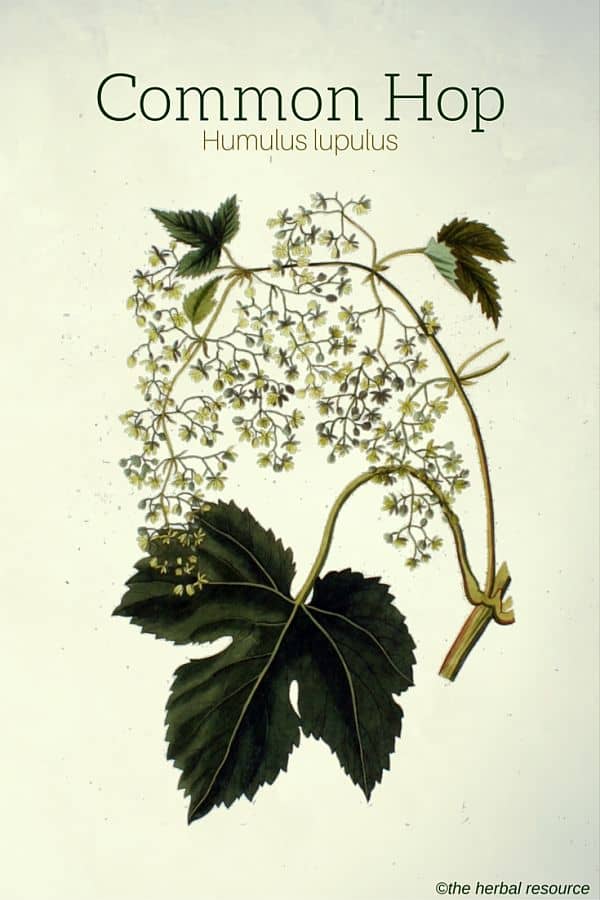
Plant Description: Hop is a plant that grows on bines; long stout stems with strong hairs to aid climbing that can reach 22 feet in height.
This herb bears dark green colored, heart-shaped leaves on a fibrous stalk with finely toothed edges.
The male and female flowers spring from the axils of the leaves on separate plants. The flowers of the male plant grow in panicles, 3 to 5 inches long, but are not cultivated. Only the female flowers are used for medicinal purposes.
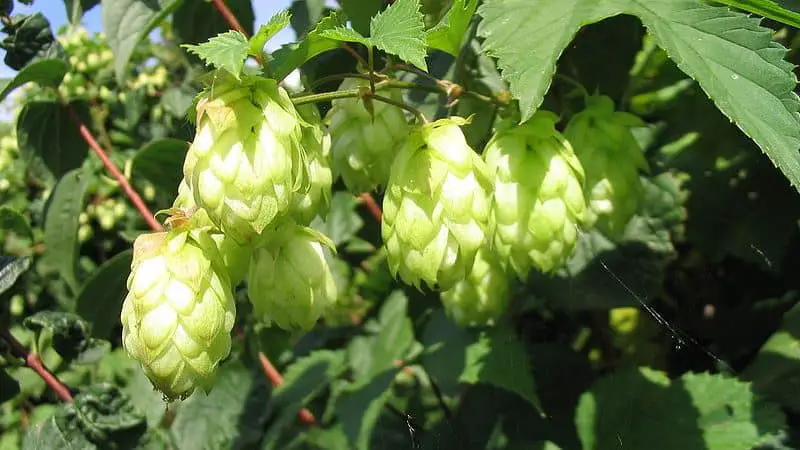
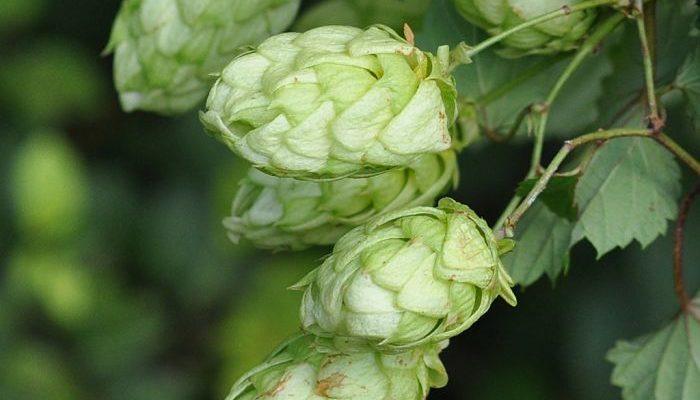
The fruit of the female plant is called strobiles and resemble small pine cones. When fully ripened the strobiles measure about 1 1/4 -2 inches long, in a rounded, oblong shape with a number of overlapping, yellowish-green bracts, attached to a separate central point containing a small fruit (achene) at the base.
Both the bracts and achene contain the bitter principle lupulin, which gives hops its tonic qualities.
Plant Parts Used: Flowers.
Therapeutic Uses, Benefits and Claims of Hops
Dried female strobiles of hops have historically been used for its sedative effects on the central nervous system due to its methyl-butenol content as a treatment for stress, anxiety, and insomnia.
The herb has been studied for anti-viral properties and anti-micro bacterial properties. It also contains numerous various flavonoids, and has been studied for containing estrogen precursors as well.
This herb also contains humulone and lupulone, noted for its anti-bacterial qualities which stimulate gastric juice production aiding in the digestion of food.
Hops has been noted to help to prevent the formation of new blood vessels, useful as an herbal anti-cancer agent, preventing different cancer types from starting, growing, or spreading.
Hops contain phytoestrogen which acts like the female hormone estrogen in the body and is now formulated with other herbs in products that are sold for herbal breast enlargement. As a tea, hop flowers have been used as a remedy for cramps, swellings and hardness of the uterus.
This plant has been used for menstrual difficulties for over 2500 years, with its earliest uses documented during early Roman and Greek history.
Extracts of hop flowers have been used in treating leprosy, pulmonary tuberculosis, and acute bacterial dysentery. A poultice of the leaf and fruit of the Hops plant has been used to remedy “cold” tumors.
A pomade made from lupulin has been used to remedy cancerous ulcerations.
Hops are reputed to decrease sexual desire, increase perspiration and are beneficial as a herbal pain reliever, diuretic, nervine and to expel intestinal parasites.
Hops contain the amino acid asparagine, along with poly-phenolic tannins, which make this herb effective in treating boils, bruises, stones in gallbladder, kidney and urinary tract, cystitis, debility, delirium, diarrhea, dyspepsia, fever, fits, hysteria, inflammation, jaundice, neuralgia, rheumatism, earache or a toothache.
Dosage and Administration
In tablets and capsules form the usual dosages of hops is 500mg. As an infusion, drink one cup in the evening to aid sleep.
Tincture, take 20 drops in a glass of water 3 times daily for anxiety or 10 drops with water up to 5 times daily for digestion.
Commercial preparations of hops can vary from product to product so the manufacturer’s directions should be followed whenever available.
Potential Side Effects of Hops (Humulus lupulus)
Although hops has sedative effects it is not recommended for administration to infants and children.
Individuals who suffer from major depression or who use medication for insomnia or anxiety such as carbamazepine, phenytoin, phenobarbital, alprazolam, diazepam, Ambien, diphenhydramine, doxepin, and nortriptyline are advised to avoid taking hops due to its sedative properties as well.
Because hops have diuretic properties which may affect certain enzymes in the liver, individuals using prescription drugs such as Allegra, Sporanox and Nizoral, etoposide, paclitaxel, vinblastine, lovastatin, and oral contraceptives should contact their healthcare provider before starting using this herb.
Combining hops with other sedative herbs such as catnip, St. John’s wort, valerian, or kava kava may result in excessive sedation.


Thordur Sturluson
Latest posts by Thordur Sturluson (see all)
- What is the Difference Between Hemp and Marijuana? - June 3, 2019

Leave a Reply