Botanical Name: Piscidia erythrina, Piscidia piscipula.
Other Common Names: Piscidia, fish poison tree, fishfuddle, Jamaica dogwood, Florida fish poison tree.
Habitat: Jamaican dogwood is endemic to Florida, USA (specifically the Florida Keys); Texas, USA; West Indies, Mexico and Latin America.
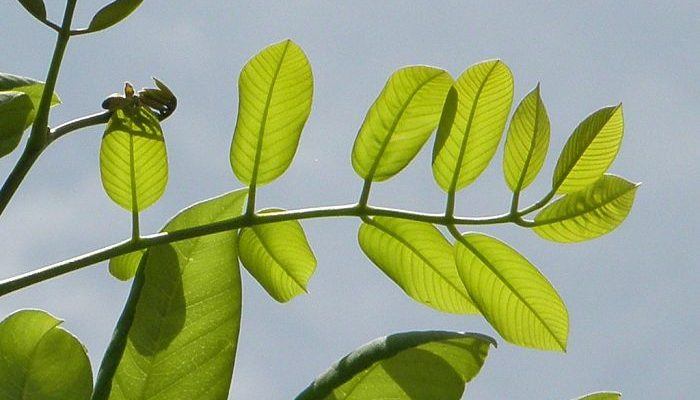
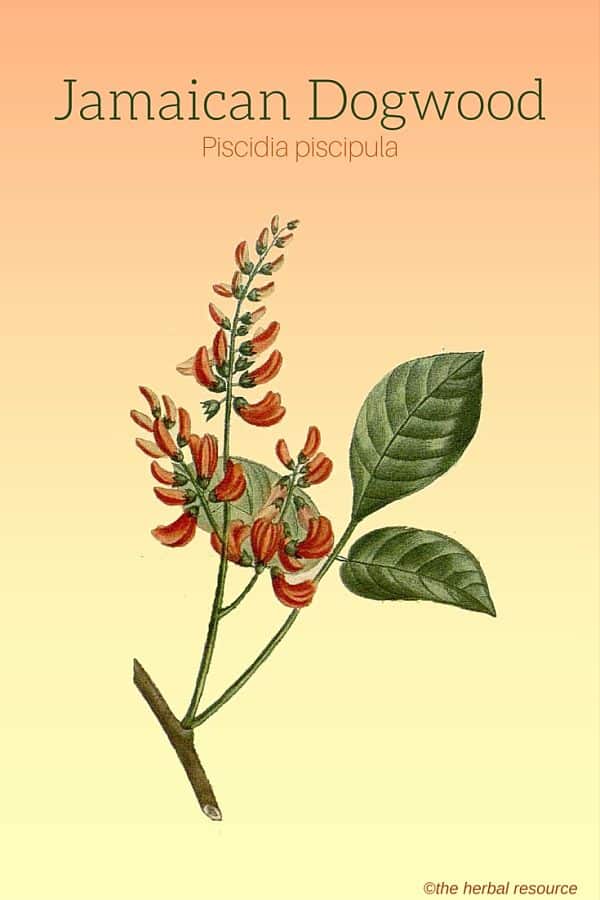
Plant Description: Jamaican dogwood is a member of the bean family with pinnately compound leaves that grow alternately on the stem.
The bark is yellow or grayish brown, lighter colored or white on the inner surface. The seed pods of Piscidia erythrina have four projecting longitudinal wings.
The taste of the bark is acrid and bitter, causing a burning sensation in the mouth. The bark gives off an unpleasant odor.
Plant Parts Used: Root and stem bark.
Health Benefits, Therapeutic Uses and Claims of Jamaican Dogwood
Its actions are nervine, anti-spasmodic, cardiotonic, analgesic, diuretic, sedative and anodyne.
The active constituents of Jamaican dogwood are isoflavones; lisetin; jamaicin; ichthyone; the rotenoids rotenone, milletone and isomilletone; b-sitosterol; and tannins.
It contains the organic acids piscidic acid, its mono-and diethyl esters; fukiic acid and its 3-0-methyl ester.
The chemical constituents are highly variable among Jamaica dogwood trees that originate from different geographic regions.
Jamaica dogwood is well-known as a traditional remedy for treating migraine and neuralgia (severe stabbing nerve pain).
Jamaica dogwood was used for its narcotic, analgesic and sweat promoting properties as early as 1844.
It has been used primarily as an remedy for insomnia, anxiety, fear, and nervous breakdown, dysmenorrhea (painful menstruation), violent toothaches and menstrual cramps.
The bark decoction of Jamaica dogwood has been used as an herbal remedy to help relieve cough and whooping cough.
For insomnia it is best combined with hops and valerian and it may be combined with black haw as a natural treatment for dysmenorrhea.
It has been used to promote sweating, to relieve smooth muscle spasms and as a remedy to reduce fever and inflammation.
Jamaican dogwood has been used throughout Central and South America as a fish poison.
It contains a substance known as rotenone that is used in insecticides to control lice, fleas, and larvae. The component rotenone is not considered to be toxic to warm-blooded animals, including humans.
Dosage and Administration
Dried root bark: Because the bark does not easily release its constituents in water, it must be prepared as a decoction (boiled).
Gently simmer 1-2 teaspoonfuls (1-4 g) of the dried root bark in a cup of water for 10-15 minutes.
To prepare medicinal tea, always use a glass or ceramic containers are considered best to prepare any medicinal decoction to avoid contaminating the herb.
Never use aluminum, or utensils treated with synthetic non-stick coatings, either as storage containers or in the preparation process. Drink as needed.
Tincture: v(1:5 in 45% ethanol): 5-30 drops (1-2 ml) 3 times daily, or as needed.
Side Effects and Possible Interactions of Jamaican Dogwood
Side effects of improper administration and consumption of Jamaica dogwood decoction may include sweating, salivation, gastric distress, nausea, numbness and depression.
It should only be administered under the supervision of a qualified health care provider who understands its pharmacology, toxicology, and proper herbal preparation.
Few studies on the therapeutic effects of Jamaican dogwood has been done on humans and there are no known reports of interactions with conventional medications.
However, Jamaica dogwood is a powerful sedative and may interact with other drugs or herbs used for insomnia or anxiety.
Children and elderly people, as well as breastfeeding and pregnant women, should never use Jamaican dogwood.


Thordur Sturluson
Latest posts by Thordur Sturluson (see all)
- What is the Difference Between Hemp and Marijuana? - June 3, 2019

Can Dogwood tree leaves be also use for tea?