Almost everyone experiences some level of motion sickness at some point during their life.
Motion sickness is a result of confused signals received by the brain. In other words, what is being perceived by the eye is not matched by the signals received by the inner ear.
The symptoms of motion sickness arise as a result of real, anticipated or perceived movement (some Imax films can cause motion sickness) and include nausea, thirst, sweating, dizziness, and vomiting.
At best these symptoms can be inconvenient and embarrassing and at worst they can be life-threatening in cases of severe dehydration. Children are particularly vulnerable to motion sickness.
Medicinal herbs for motion sickness cannot repair the crossed signals occurring in the brain, but there are a number of treatments, both herbal and pharmaceutical, that can treat the symptoms.
Many drugstore remedies can cause severe drowsiness, but there are a number of herbal treatments that are effective without this side effect.
Regardless of the treatment of choice, it is usually most effective to take it an hour to 30 minutes prior to travel and then bring sufficient supplies to be administered throughout the trip.
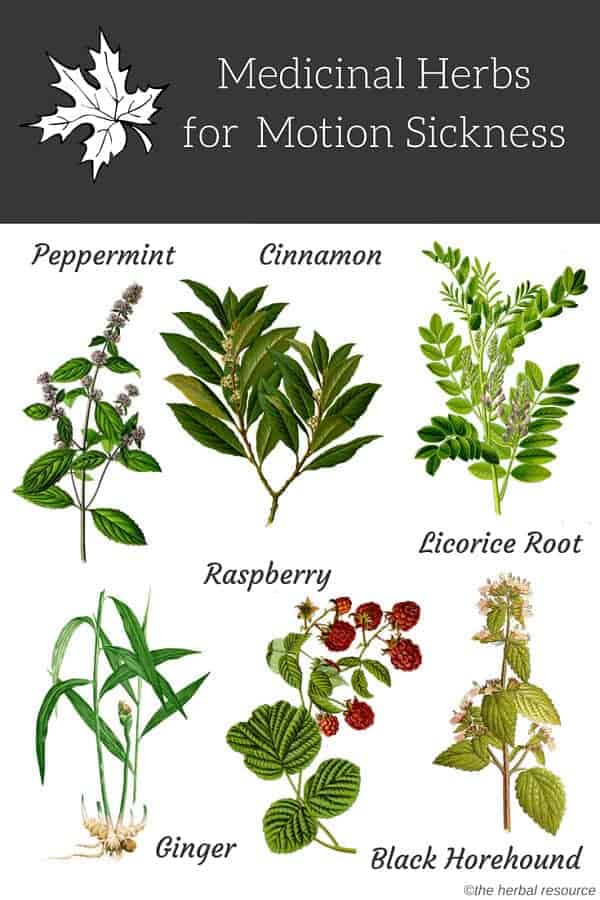
Commonly Available Herbs for Motion Sickness
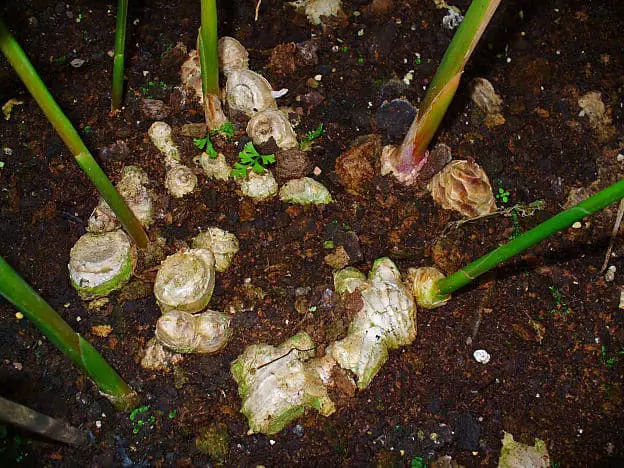
Ginger (Zingiber officinale)
Ginger has been used for over 2,000 years to calm and soothe the stomach. There are numerous studies to support the effectiveness of ginger as of the better herbs for motion sickness. Some even suggest that it might be more effective than the chemical compound dimenhydrinate, which is the active ingredient in most drugstore remedies.
Raspberry (Rubus idaeus)
Raspberry leaf tea is frequently prescribed to alleviate morning sickness but has also been suggested as one of the better herbs for motion sickness. It can also be combined in tea with ginger for even more potency.
Cinnamon (Cinnamomum verum)
Cinnamon is used as a medicinal herb to provide relief for many digestive disorders including nausea.
Black Horehound (Ballota nigra)
This is a perennial herb recorded to be a traditional herbal remedy for symptoms of motion sickness. It is related to peppermint and contains volatile oils associated with the treatment of nervousness. One to two teaspoons of the dried herb can be used to infuse tea.
Peppermint (Mentha piperita)
This popular garden herb contains volatile oils that act to calm the stomach and have an overall calming effect. It has also been used as a medicinal herb to treat symptoms of diverticulitis and Irritable Bowel Syndrome. Its scent can be used to combat feelings of lightheadedness associated with motion sickness.
Licorice Root (Glycyrrhiza glabra)
This medicinal herb is a potent anti-inflammatory thought to soothe the mucous membranes of the stomach and therefore alleviate nausea and upset stomach. It is not recommended for use if pregnant, diabetic or if suffering from hypertension.
Cayenne (Capsicum annum or Capsicum frutescens)
Cayenne has been used in the treatment of digestive problems and may offer relief of nausea caused by motion sickness. However, it is also thought to improve the effectiveness of other herbal remedies and may be better taken in conjunction with other herbs like ginger.
Catnip (Nepeta cataria)
This herb has a pleasant taste and gentle action, which makes it very suitable for children. The active components, iridoids, tannins and volatile oils, have a soothing and sedative quality on both digestion and nerves. Catnip can be taken as an infusion prior to and during travel.
Valerian (Valeriana officinalis)
This perennial herb is commonly found along European river banks. Like catnip, its active compounds work to sedate the nervous system. This makes valerian an effective herbal remedy for reducing anxiety that can sometimes increase the effects of motion sickness. The fresh root is more potent than the dried and should be taken before travel.
Chamomile (Chamomilla recutita)
Chamomile acts to reduce anxiety and nervous tension. Its active ingredients include sesquiterpene lactones, flavonoids, coumarins, and phenolic acids. Its gentle taste also makes this a safe and desirable option for children.
Fennel (Foeniculum vulgare)
Fennel is used as a natural remedy for upset stomach and may be useful in the treatment of motion sickness. Fresh fennel seeds (approximately 20-30) can be eaten to combat nausea or it can be taken in capsule form (300-400 mg per day).
Some other natural herbs that have been used for motion sickness treatment.
- Anise – (Pimpinella anisum)
- Peach – (Prunus persica)
- Cabbage – (Brassica oleracea)
- False Unicorn – (Chamaelirium luteum)
- Sweet Orange – (Citrus sinensis)
- Galangal – (Alpinia officinarum)
Other Remedies for Motion Sickness
Besides pharmaceuticals and medicinal herbs for motion sickness, acupressure has long been used as a treatment. treat symptoms of motion sickness.
Other factors such as tiredness and stress might contribute to the onset of motion sickness and so relaxation techniques prior and during travel may be a useful preventative measure.


Thordur Sturluson
Latest posts by Thordur Sturluson (see all)
- What is the Difference Between Hemp and Marijuana? - June 3, 2019

FYI: Be very careful when experiencing signs of motion sickness, you could also be having a stroke. This happened to my next door neighbor. He was hospitalized and treated for motion sickness for 24 hours then released and went home. The next morning he had a massive stroke that left him paralyzed and disabled for life.
There was a sea sick remedy that was used on a boat in the virgin islands. It was a little bag of hebs and one would pour Cruzan Rum on it and breath through the little cotton bag. I don’t know what was init but I have never been able to duplicate it. Any ideas what mysterious Caribe Voodoo may have been at work here? It works like a charm. I had forgotten about it until my last trip to hell.