Botanical Name of Pygeum: Prunus africanus.
Pygeum bark gained popularity in Europe in the 1700s but had been used long before that by South African tribes. Later the extract of the bark became a popular form of taking this supplement.
The tree’s many active ingredients have been the reason for its uses as an herbal remedy for a variety of ailments.
It is becoming endangered due to the demand for its bark.
Pygeum Bark – Therapeutic Uses and Claims
The herb’s medicinal applications are mostly base on traditional uses, but some are backed up by scientific studies.
Pygeum bark has been shown to be beneficial in treating benign prostatic hyperplasia (BPH.)
It is especially helpful in increases urinary function, often limited due to an enlarged prostate. Combining this supplement with saw palmetto and stinging nettle increase the effectiveness of each herb.
Pygeum bark also shown promise in preventing, combating and reducing the symptoms of prostate cancer and chronic prostatitis.
In animal studies, the herb showed an increase in the volume and viability of sperm in the semen. This indicates possible use of this herb for treating male infertility.
Traditionally, the bark of the tree was gathered and powdered and made into a tea which was taken for genito-urinary complaints.
Some of the less researched, traditional uses of this herb include use as an aphrodisiac, fever, impotence, kidney disease, malaria, hair loss, partial bladder outlet obstruction (BOO), sexual performance, urinary tract infections, inflammation, malaria, prostatic adenoma, prostatitis, and psychosis.
Active Substances and Constituents
Fat-soluble extracts of pygeum bark contain phytosterols (beta-sitosterol and campesterol) and pentacyclic terpenes such as oleanolic acid, ursolic acid, and maslinic acid.
The bark extract also contains ferulic acid esters (docosanol and n-tetracosanol) and tannin. Amygdalin, a cyanogen glycoside, has also been detected.
Extracts of pygeum are usually standardized to contain 14% phytosterols and 0.5% docosanol.
Plant Parts Used
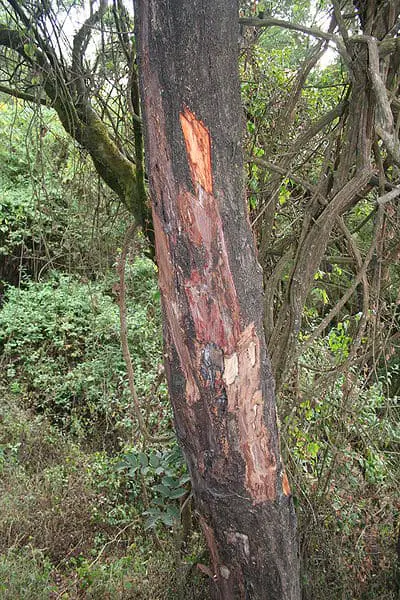
The bark. The pygeum bark contains an oil with many active ingredients.
Dosage and Administration
The powdered bark is made into capsules or a liquid extract.
The standard intake of the powdered bark is 50 to 200 mg. It can be taken in a single or divided dose.
Taking one 100 mg dose has been found just as useful as taking two 50mg doses at different times.
Side Effects and Possible Interactions of Pygeum Bark
Side effects of pygeum bark use may include stomach discomfort, diarrhea, constipation, nausea, dizziness, or visual disturbances.
Pregnant women should not take pygeum due to the lack of scientific evidence about its safety for developing fetuses. It has not been proven safe for use by children.
It may cause an increase in the benefits to the prostate from prescription drugs or other herbal supplements aimed at reducing it. For this reason, care should be taken when adding this herb to any regimen for BPH or other prostate condition.
Other Common Names
Pigeum, red stinkwood, African plum, African prune, alumty, iluo, kirah, natal tree, pigeum africanum
Habitat
Pygeum is found across the continent of Africa, especially the Southern portion. It generally grows at altitudes of 3000 feet or higher.
Plant Description
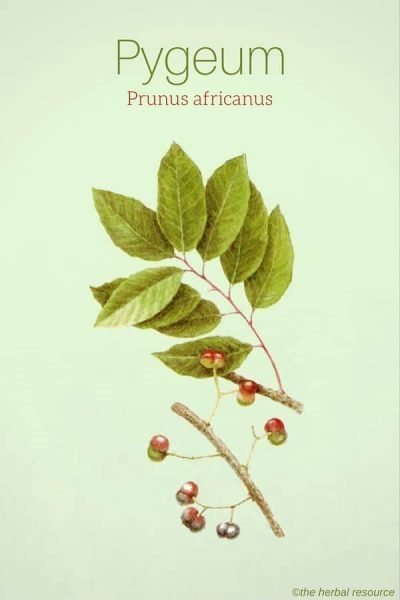
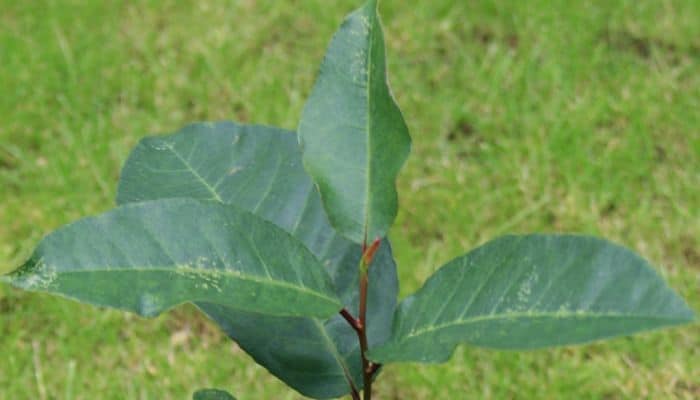
The pygeum tree is a large evergreen, often growing to 150 feet tall. It is a member of the Rosacea family.
The trees bear large red or brownish fruits resembling plums, after flowering in the summer.
The fruit ripens in June, July, and August in Northern Africa, and later in Southern countries. The fruit is also used for food by natives, as well as by birds and animals.
The density of the wood of the African plum tree makes it useful for buildings and tools, as well as a long-burning fuel.
Supporting References
Balch, Phyllis A.: Prescription for Herbal Healing. New York, Avery 2002.
Duke, James A.: Handbook of Medicinal Herbs. Boca Raton, Florida, CRC Press 2002.
Mills, Simon & Kerry Bone: The Essential Guide to Herbal Safety. St. Louis, Elsevier 2005.
van Wyk, Ben-Erik & Michael Wink: Medicinal Plants of the World. Portland, Oregon, Timber Press 2004.
White, Linda B. & Steven Foster: The Herbal Drugstore. The Best Natural Alternatives to Over-the-Counter and Prescription Medicines. New York, Signet 2002.


Thordur Sturluson
Latest posts by Thordur Sturluson (see all)
- What is the Difference Between Hemp and Marijuana? - June 3, 2019

Very interesting but lost me at “stomach discomfort, diarrhea, constipation, nausea, dizziness, or visual disturbances.” I’ll pass on this one…