Botanical Name: Prunella vulgaris.
Other Common Names: Common self heal, selfheal, heal-all, heart of the earth, bronella, pronella, prunella.
Habitat: Self heal is thought to have originated in Europe. Today, it is found in most countries with a suitable habitat, including Europe, Asia, Japan, and North America.
It requires moist soil but is found in all terrains, including grasslands, woodland edges, roadsides, and wastelands. It prefers areas which are either in direct sunlight or only partially shaded.
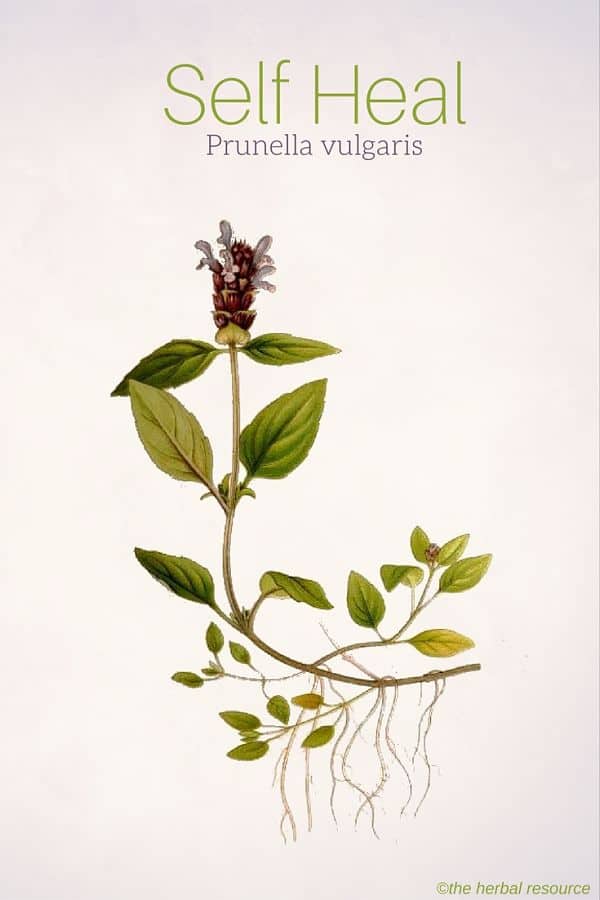
Description: Self heal is a plant in the genus Prunella which includes seven known species. Self heal grows to about 30 to 40 cm or 1 to 2 feet high and then tends to fall over and sprout roots.
It has tough reddish colored stems which branch at the leaf axis, and the leaves are lance-shaped, with serrated edges and reddish tips, measuring from 5 to 8 cm. long by about 2.5 cm. wide.
The leaves appear in pairs along opposite sides of the squarish stem.
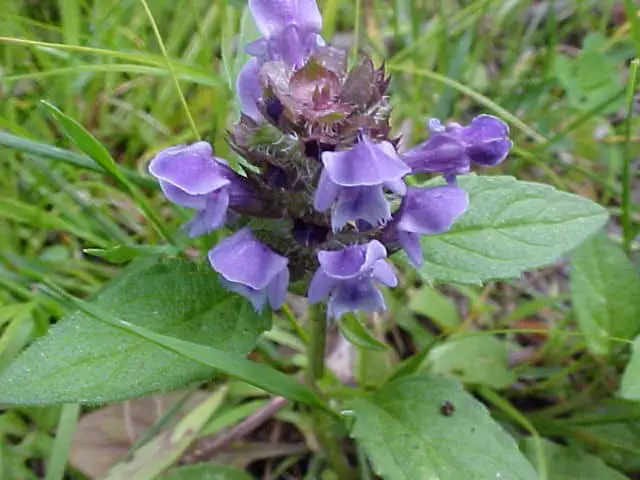
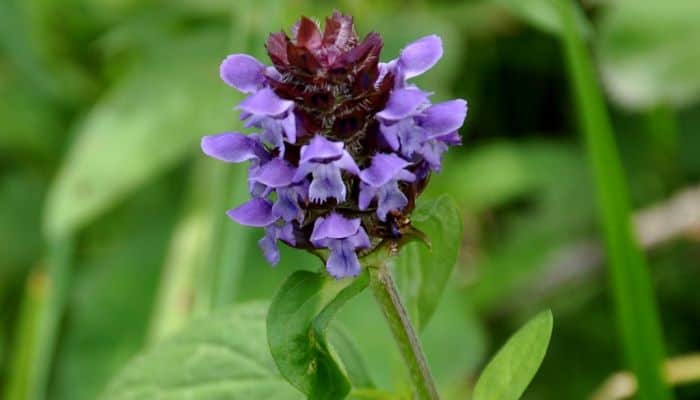
The flowers are tubular in shape, and the upper lip forms a purplish hood, while the lower lip has 3 lobes and is white in color.
It is hermaphroditic, meaning that it possesses male and female attributes, and is self-fertilizing.
Plant Parts Used: The whole plant is used.
Therapeutic Uses, Benefits and Claims of Self Heal
Self heal has been used as a medicinal herb for centuries. It was used as some sort of panacea as it has been credited with the treatment of everything from minor cuts to internal bleeding, hence its name, heal-all.
It has been used traditionally as an herbal remedy to treat diarrhea, high blood pressure, fevers, weaknesses of heart and liver and internal bleeding.
Scientific analysis on self heal has revealed that it has an antibacterial action which inhibits the growth of pseudomas, E. Coli and Bacillus typhi and research studies are being conducted to see if this herb could be used to treat diabetes, AIDS, and cancer.
As an ointment, it has been used as an herbal remedy for bleeding hemorrhoids or swollen anal veins and vaginal pain and inflammation.
An eyewash made from self heal has been used to relieve tired, swollen eyes, and is reportedly effective as a treatment for conjunctivitis.
As a mouth and throat wash, it is used to soothe sore throats, and to reduce swelling of the mouth, throat, and lymph nodes.
A tea made from self heal is used as a folk remedy to treat anxiety, depression and mood swings.
Additionally, it has been used as a treatment of problems associated with the liver, kidneys and gallbladder. No scientific studies are available at the moment to confirm the effectiveness of this herb for those ailments.
Ointments made from the plant have been used to ease the discomfort associated with eczema and psoriasis.
For open cuts or wounds, a poultice can be applied directly as it is thought to reduce or prevent infection.
Dosage and Administration
Self heal can be prepared in many ways, depending on how it will be used. It can even be used as a salad herb. The following dosage guidelines have been recommended by herbalists.
Infusion/Tincture: Used to reduce or stop most types of bleeding. One or two teaspoonfuls of crushed and dry self heal herb can be added to one cup of boiling water and allowed to stand for 10 minutes for proper infusion.
The herb itself should not be boiled, Alternatively, one or two ml. of self heal tincture may be administered three times daily.
Decoction: Prepared with fresh flower spikes and used to treat high blood pressure, bad temper, anxiety, and hyperactivity. The decoction is frequently mixed with Chinese chrysanthemum (ju hua) for more effective healing.
Poultice: Crushed fresh leaves can be applied directly wounds or used as a dressing for small cuts and scrapes to prevent infection.
Eye and Mouth/Throat Wash: Strain a cup of the infusion through cheesecloth or some other fine filter.
Herb: Used as a preventative measure for many ailments. The flowers, leaves, and tender shoots may be chopped and added to soups, stews, and salads.
Potential Side Effects and Interactions of Self Heal
Self heal has been used for centuries as a panacea.
There are no reported or documented serious side effects or interactions of using this herb either externally or internally.
It does not contain any toxic substance so it can not be considered poisonous in any way.
Possible minor side effects include constipation, dizziness, and weakness, but these symptoms are not common.


Thordur Sturluson
Latest posts by Thordur Sturluson (see all)
- What is the Difference Between Hemp and Marijuana? - June 3, 2019

Thanks for all the interesting info on Self Heal-such a interesting name for such a herb. Self Heal not only have great health benefit but the power of its beauty is equally great.