Botanical Name of Malabar Nut: Justicia adhatoda, Adhatoda vasica.
Other Common Names: Malabar nut, adulsa, arusha, vasaka, justicia adhatoda, adulsa arusa, adathodai, bakash, adathoda, adalodakam, adusoge, addasaramu, lion’s muzzle, stallion’s tooth.
Habitat: This shrub grows on the plains of India and in the lower Himalayans, up to a range of 1000 meters above sea level.
This plant is also cultivated in other tropical areas. It grows well in low moisture areas and dry soils.
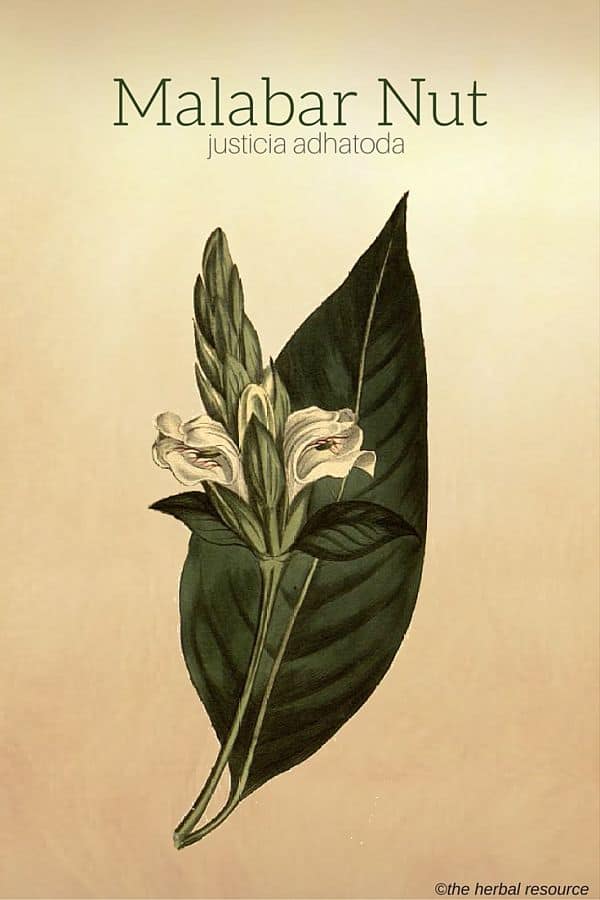
Plant Description: Adhatoda vasica is a small evergreen plant, of the Acanthaceae family, with broad, lanceolate (sharp and pointed like a lance) leaves measuring 10 to 16 centimeters in length and 5 centimeters wide. They become greenish-brown when dried and have a bitter taste. They have a smell similar to strong tea.
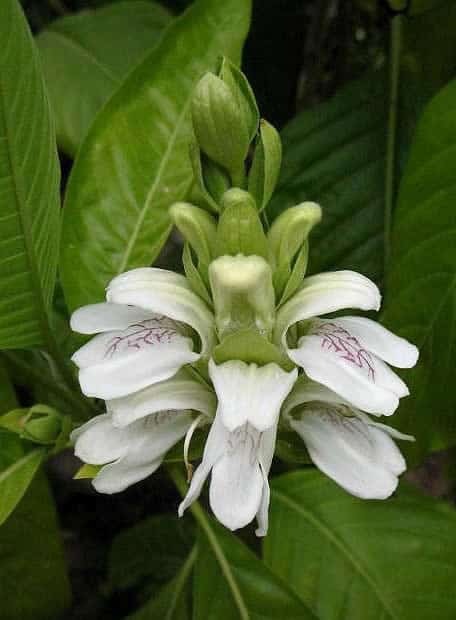
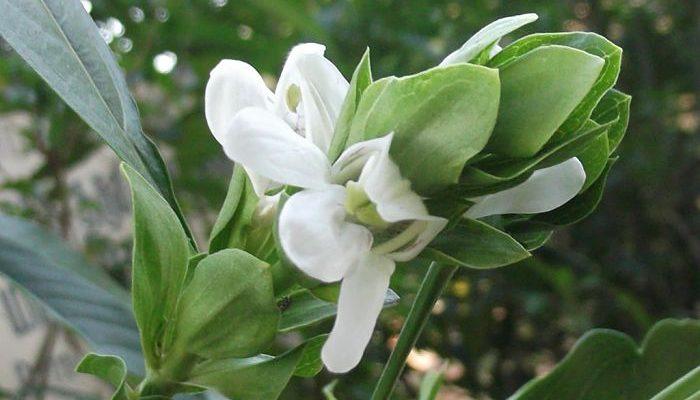
The wood of the stem is soft and makes a great charcoal for gunpowder. The flower has large, attractive, white petals, streaked with purple on the lower lip. The fruit is a small capsule with four seeds.
Plant Parts Used: Medicinal applications use the leaves, roots, flowers and stem bark of this plant.
Therapeutic Uses, Benefits and Claims of Adhatoda Vasica
The leaves, roots and flowers of Adhatoda vasica also called vasa or vasaka were used extensively in traditional Indian medicine for thousands of years to treat respiratory disorders such as asthma.
Adhatoda vasica is considered useful in treating bronchitis, tuberculosis and other lung and bronchiole disorders.
A decoction of the leaves may be used as an herbal treatment for cough and other symptoms of colds.
The soothing action helps irritation in the throat and the expectorant will help loosen phlegm deposits in the airway which makes adhatoda a good remedy for a sore throat.
A poultice of the leaves may be applied to wounds for their antibacterial and anti-inflammatory properties. Some believe the poultice is also helpful in relieving rheumatic symptoms when applied to joints.
It has been used to control both internal and external bleeding such as peptic ulcers, hemorrhoids, and bleeding gums.
In Ayurvedic medicine, adhatoda vasica is used for a multitude of disorders including; leprosy, blood disorders, heart troubles, fever, vomiting, loss of memory, leucoderma, jaundice, tumors, mouth troubles, sore-eye, and gonorrhea.
This herb is known for its antispasmodic, expectorant and blood-purifying qualities.
A juice made from the leaves was used as a treatment for diarrhea and dysentery, and in southern India, the powdered leaves were used to treat malaria. Additionally, it was used as a folk medicine to speed delivery during childbirth.
Dosage and Administration
Adhatoda vasica can be an ingredient in many herbal preparations, and it may be listed under any of its names.
It is important to follow the manufacturer’s recommended dosing schedules if the herb is intended as an herbal medicine.
Herbalists often recommend one to three grams of the dried leaves (or equivalent).
Possible Side Effects and Interactions of Adhatoda Vasica
Adhatoda is considered safe in recommended usage and dosing. The safety of this herb has not been tested in children and should be avoided, unless directed by a medical professional.
Use of this plant is not recommended during pregnancy (except at birth, and then only under the direction of a medical practitioner.)
Exercise care when taking this herb with other drugs or supplements that exhibit expectorant or antispasmodic effects.
Supporting References
Caldecott, Todd: Ayurveda: The Divine Science of Life. Elsevier/Mosby 2006.
Chopra, R.N.: Indigenous Drugs of India. Calcutta, India. Academic Publishers 1982.
Glasby J.S.: Encyclopedia of the Alkaloids. London, England. Plenum Press 1978. p. 1367.


Thordur Sturluson
Latest posts by Thordur Sturluson (see all)
- What is the Difference Between Hemp and Marijuana? - June 3, 2019

It is called Bhaikarr in Hindko language of Pakistan