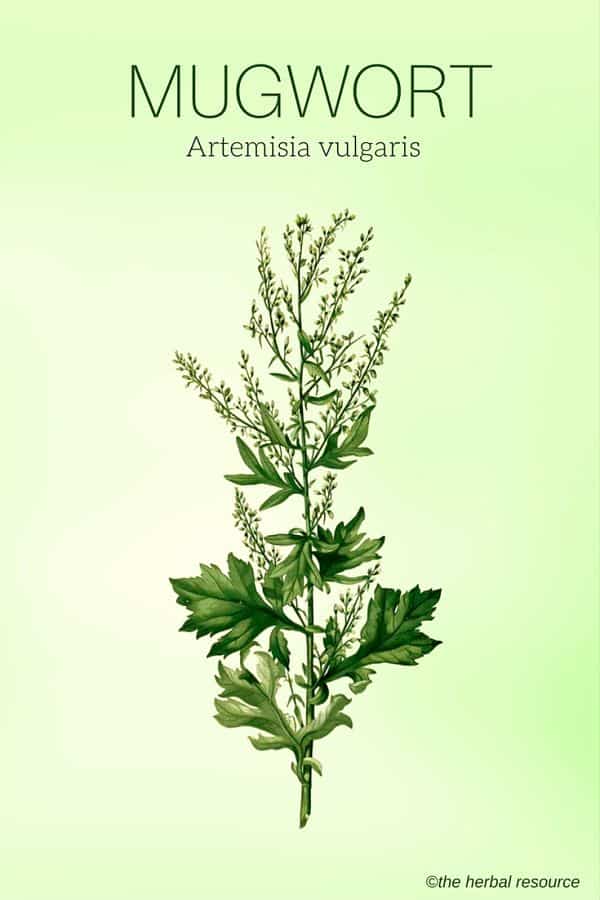
Botanical Name: Artemisia vulgaris
The plant is named after the ancient Greek goddess Artemis, a goddess of virginity, animals, hunting, and childbirth. The species name vulgaris means common.
Its English common name derives from the Old English word muggiawort, which means “midge plant”.
Other Common Names: Common wormwood, felon herb, wild wormwood, naughty man, chrysanthemum weed, old uncle Henry, cingulum Sancti Johannis, common artemisia, sailor’s tobacco, Chinese moxa, old man and St. John’s plant (NB: It should not be confused with St. John’s wort), armoise vulgaire (French), Ai Ye (Chinese), Beifuss (German), artemisia vulgar (Spanish), gråbynke (Danish).
Habitat: Mugwort is native to Europe, Africa, and temperate Asia and is today widely naturalized in most parts of the world.
It usually grows best in loamy soils that are nitrogen-rich and slightly alkaline. It prefers sunny places, and it can easily be found along roadsides, weedy and waste areas.
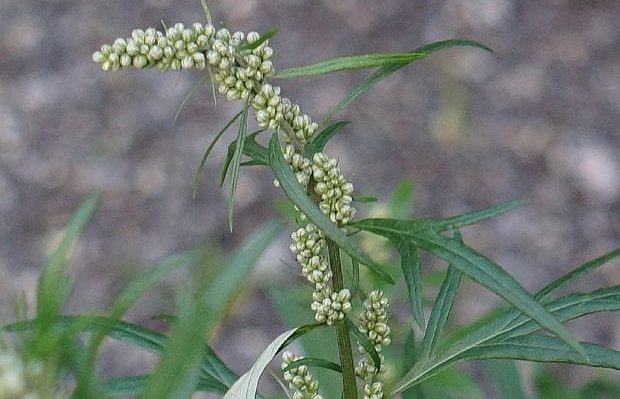
Plant Description Mugwort is a tall shrub-like perennial plant of the sunflower family. It has purple angular stems and can grow up to 5 feet tall.
The leaves are dark green on top and have a smooth texture, the underside is covered with dense white-tomentose (plant hairs that are flattened and matted) hairs.
The flowers are small and reddish-brown or yellow with a hint of green. This plant blooms from July to October.
Plant Parts Used: Both the aerial parts and the root of mugwort has been used in medicine. The most common, both in Western and Chinese herbal medicine, is to use the leaves.
The leaves and the flower tops are collected and dried just before the plant blooms, usually in August. Later in the autumn, the roots can be harvested and dried whole.
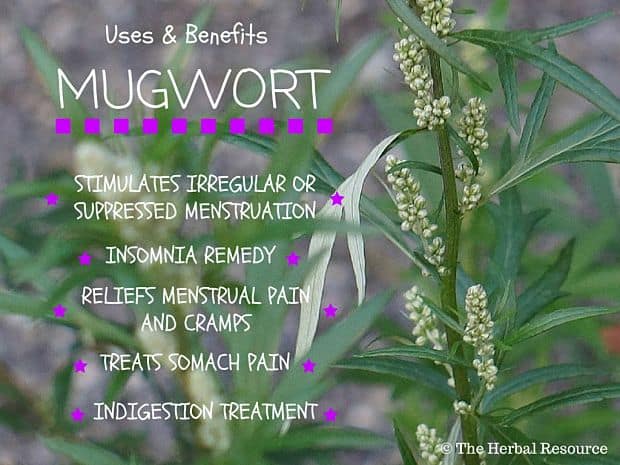
Therapeutic Uses, Benefits and Claims of Mugwort
Mugwort contains volatile oil, flavonoids, a sesquiterpene lactone, coumarin derivatives and triterpenes.
Mugwort is most commonly used to treat disorders of the digestive tract and aid in all digestive functions and is said to have properties that are anti-fungal, antibacterial, expectorative and antiasthmatic.
It is considered a good herb for a gastric disorder, stomach pain, and bowel complaints. It is used for poor appetite, indigestion, travel sickness, and stomach acidity.
Mugwort is thought to be effective in treating a wide range of parasitic infections, such as tapeworm, roundworm, and thread-worm.
It is also considered effective against fungal infections like ringworms that infect the skin.
Traditionally, this herb is used to stimulate irregular or suppressed menstruation. Some believe it stimulates the uterus and it is useful for menstrual pain and cramps.
Furthermore, it has been used to induce miscarriage probably due to the herb’s ability to interfere with menstruation.
Additionally, mugwort is used as a folk and herbal remedy for various ailments including colds, epilepsy, colic, fevers, asthma, bronchitis, sciatica and kidney problems and there is some scientific indication it can lower blood sugar levels.
Mugwort has also been used as an herbal remedy for nervousness, exhaustion, gout, bruises, chilblains (a foot condition) and depression, especially when it is associated with loss of appetite.
This herb is said to have mild narcotic and sedative properties, which explain its use to promote sleep in cases of insomnia.
Because of its diuretic properties, it is thought to have medicinal benefits for the liver, spleen, and kidney. It is also considered an excellent insect repellent.
This herb has mild purgative abilities and can be used as a remedy for constipation.
In folklore it is most famous for being considered a “dream” herb, enhancing remembrance of dreams, both during sleep and in trances, and precognitive dreaming or dreaming of future events.
Dosage and Administration
There is no established, proven safe or effective dose of mugwort. Traditionally, it is mainly used as tea. Some herbalists recommend 2 cups of mugwort tea using fresh leaves infused for 5 to 10 minutes in boiling water daily for six days.
As a commercial supplement one to two capsules two times daily with water is considered a standard dosage but always follow the manufacturer’s instructions.
Related Products You May be Interested in
|
|
|
See more Mugwort products
| ||
| The Herbal Resource may receive a small commission from sales of specific product (but at the same price to you). | ||


Possible Side Effects and Interactions of Mugwort
Because the preparation instructions and dosage amounts of mugwort are not clearly defined, pregnant and breastfeeding women should not use the herb.
Mugwort contains a chemical called thujone, which is responsible for the medicinal properties of the plant. In large doses, thujone is toxic so caution is advised.
It can cause miscarriages because it stimulates menstruation so pregnant women should avoid it. Individuals who have a sensitivity to its pollen should avoid using it.
Do not use mugwort as a medicinal herb unless under the care and supervision of a licensed and qualified healthcare professional.
Supporting References
Hoffmann, David: Medicinal Herbalism: The Science and Practice of Herbal Medicine. Rochester, Vermont. Healing Art Press 2003.
Weiss, Gaea & Shandor Weiss: Growing & Using Healing Herbs. New York, Wings Books 1999.
Tierra, Lesley: Healing with the Herbs of Life. Berkeley, California. Crossing Press 2003.
Hershoff, Asa & Andrea Rotelli: Herbal Remedies. A Quick and Easy Guide to Common Disorders and Their Herbal Treatments. New York. Avery 2001.


Thordur Sturluson
Latest posts by Thordur Sturluson (see all)
- What is the Difference Between Hemp and Marijuana? - June 3, 2019

Leave a Reply