Botanical Name: Scutellaria lateriflora.
Other Common Names: Blue, greater, hairy, hooded, American, European western, maddog and side-flowering skullcap.
It is also called scullcap, helmet flower, blue pimpernel, quaker bonnet, hooded willow flower, mad-dog weed, mad weed, hoodwort and hoodwart.
Habitat: This herb is often found in partially shaded, wetland areas. It prefers light shade to full sun and wet to moist soil with plenty of organic matter. This perennial plant is native to North America.
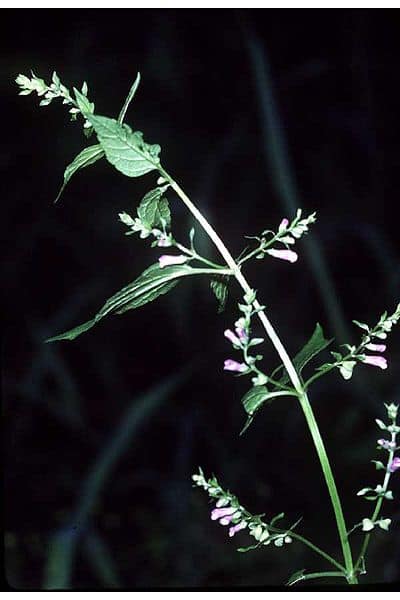
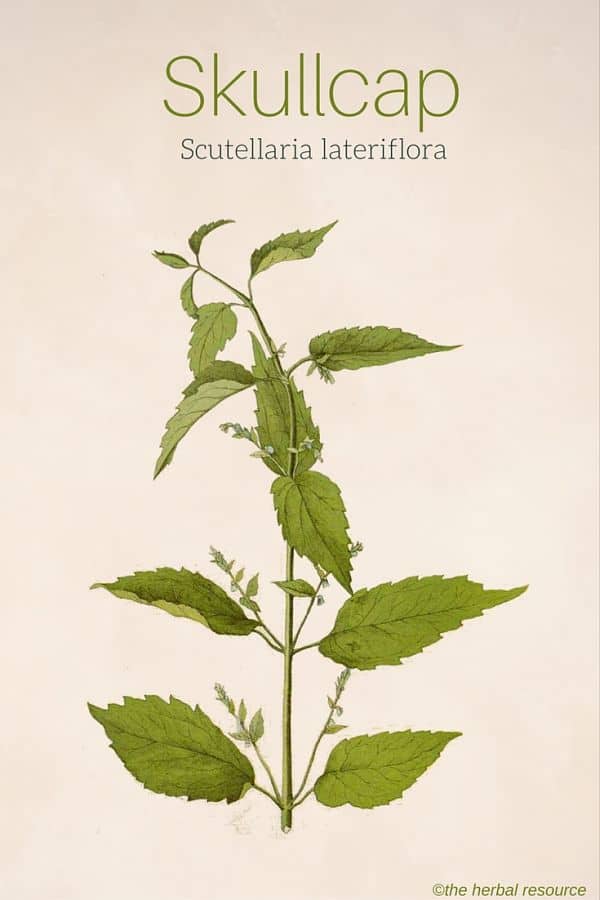
Plant Description: Skullcap grows to a height of 45 to 60 centimeters tall. It has a light green to reddish-green square stem with occasional branches.
The leaves measure 7.5 centimeters long by 5 centimeters across and are coarsely serrated around the edges.
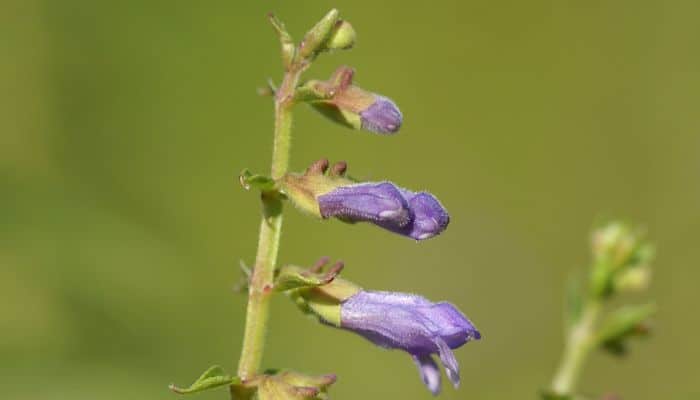
The blue-lavender flowers are hooded, tube-shaped and two-lipped. The upper lip forms a hood and the lower lip has two lobes.
This plant blooms from May to August. The flowers are replaced by a two-chamber seed pod containing four seeds. The roots system consists of a taproot and rhizomes.
Plant Parts Used: The flowers and the leaves are used for medicinal purposes and are collected during the summer when the plant is in bloom. The herb can be dried for later use.
Therapeutic and Traditional Uses, Benefits and Claims of Skullcap
Skullcap contains substances like flavonoids, iridol, sesquiterpene, tannins, bitter substances, essential oil, resin, iron, silicon, calcium, magnesium, lignin and wogonin.
Some Native American tribes used it as an emmenagogue to bring young girls into womanhood.
It was also traditionally used to bring on visions (in large doses) during spiritual ceremonies.
It was once used as a treatment for rabies and schizophrenia (hence the names maddog skullcap, maddog weed, and mad weed.)
This plant is also a nervine with sedative qualities and is helpful in the treatment of many nervous conditions such as epilepsy, hysteria, anxiety, delirium tremens and as a remedy for panic attacks.
It has also been found useful in treating symptoms of withdrawal from barbiturates and tranquilizers.
Medicinal infusions of this herb have been used to promote menstruation.
An infusion of skullcap may also be helpful in treating throat infections and, due to its antispasmodic and sedative effects. It is also used for treating headaches from stress, neuralgia, and from incessant coughing.
This herb can also be used to induce sleep naturally without the negative effects of many prescription and over-the-counter sleep aids.
Skullcap is gaining some recognition as an alternative treatment for attention deficit disorder (ADHD/ADD).
This plant is sometimes used to treat the symptoms associated with anorexia nervosa, fibromyalgia and even mild Tourette’s syndrome.
Skullcap is also used as an herbal treatment for asthma and as a hiccup and hangover remedy.
Dosage and Administration
Skullcap is available in powder or liquid extract form and as a dried herb. It is commonly sold in capsule form as well.
The recommended dosage for adults is 1 to 2 grams of the dried herb, 2 to 3 cups of tea, 2 to 4 mL of the liquid extract three times daily, or 2 to 5 mL of the tincture three times daily.
Children may use skullcap but in small doses. The best method of delivery is a mild tea. The child’s physician should be consulted before use.
To make a medicinal tea try adding one pint of boiling water to 1 oz. of the dried herb and steep for 10 minutes. This can be served in half cup servings every few hours.
For children add 1 cup boiling water to 1 tsp. of dried leaves and steep only 2 minutes to yield a milder tea.
Possible Side Effects and Interaction of Skullcap
Overdose symptoms include giddiness, stupor, confusion, irregular heartbeat and twitching. Pregnant women shouldn’t use this herb since it may cause a miscarriage.
Some supplements have been tainted with plants of the Teucrium species, which have been shown to cause liver damage. It’s important to seek skullcap from reputable sources.
There are no documented cases of negative interactions with other herbs or medications although it does have a sedative effect and should not be combined with prescription sedatives.
Supporting References
Williamson, Elisabeth M.: Potter’s Herbal Cyclopaedia. Essex, England. Saffron Walden 2003.
Bown, Deni: The Royal Horticultural Society New Encyclopedia of Herbs & Their Uses. London, Dorling Kindersley 2002.
Mindell, Earl: Earl Mindell’s Herb Bible. New York. Simon & Schuster / Fireside 1992.
Duke, James A.: The Green Pharmacy Herbal Handbook. Rodale / Reach 2000.
Lucas, Richard M.: Miracle Medicine Herbs. Englewood Cliffs, New Jersey, Prentice Hall 1991.
Hershoff, Asa & Andrea Rotelli: Herbal Remedies: A Quick and Easy Guide to Common Disorders and Their Herbal Treatments. New York. Avery 2001.
Hoffmann, David: The New Holistic Herbal. Boston. Element Books Ltd. 1990.


Thordur Sturluson
Latest posts by Thordur Sturluson (see all)
- What is the Difference Between Hemp and Marijuana? - June 3, 2019
Leave a Reply