Botanical Name: Thymus vulgaris.
Other Common Names: English fresh, summer, German winter, narrow-leafed French, Greek gray, broad leaf English and garden thyme, mother of thyme.
Habitat: Thyme originated in the Mediterranean area. Since then, it has been adapted to many different climates around the world.
The first colonists brought it to North America where it was used as a food preservative and as a medicinal herb.
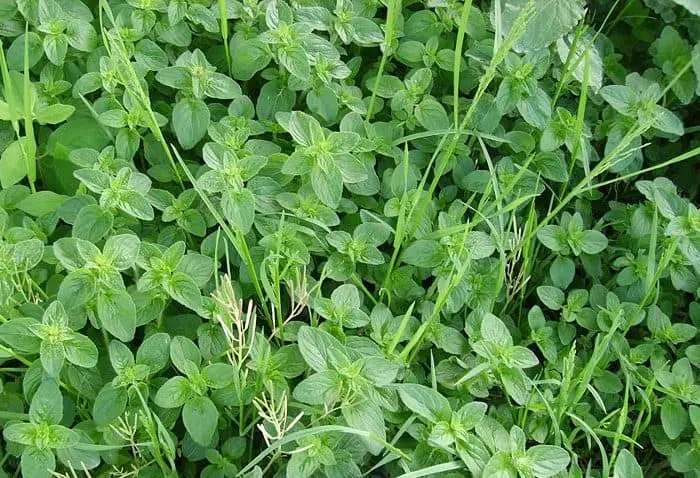
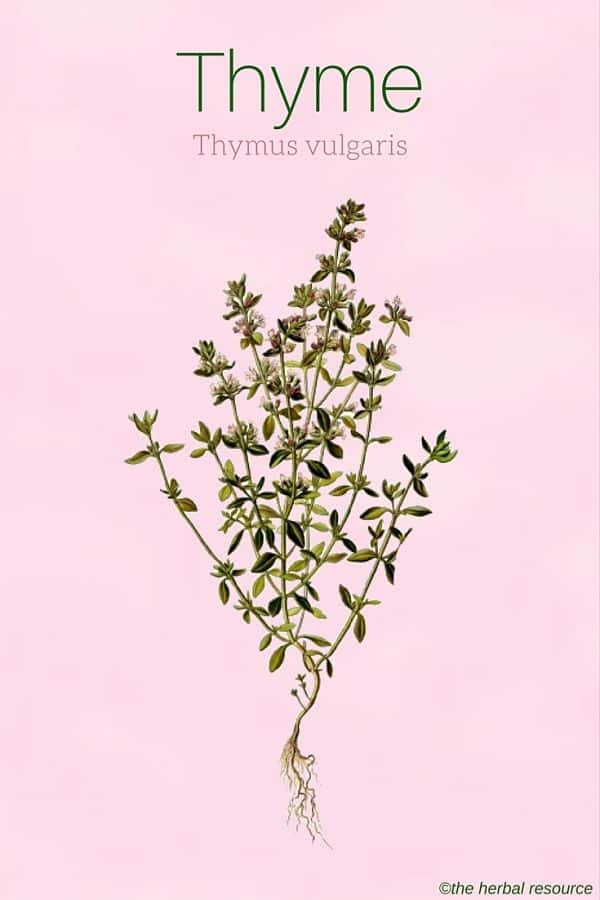
Plant Description: The plant grows numerous stems which are hard, branched and procumbent. They grow from 4 inches to 1 foot high. The thyme stem is ordinarily a reddish-brown in color.
Its bright green oval leaves, typically 1/8 inch broad and tapering below into very short foot-stalks, are smooth and contain numerous small glands.
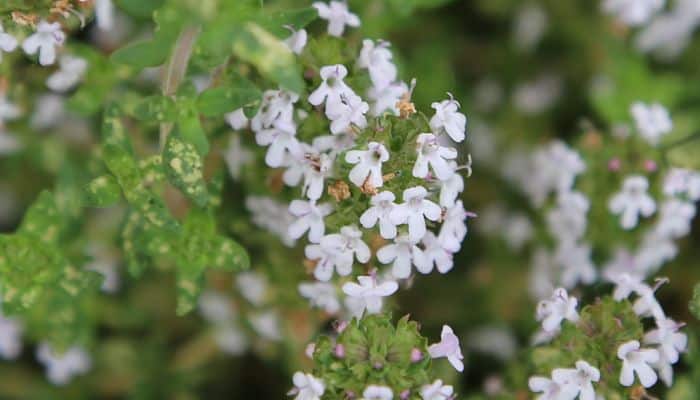
The flowers are pink and bloom during the summer months. The thyme root is woody and fibrous.
Plant Parts Used: Only the leaves and the flowering tops.
While it can be harvested at any time, it is best to harvest the leaves just as the flowers begin to bloom.
Therapeutic Uses, Benefits and Claims of Thyme
The history of thyme as being in use as both a seasoning and a medicinal herb for goes back more than 3000 years.
Archaeologists have found ancient writings in Egypt discussing the use of it and it has been identified as one of the ingredients used in mummification.
Ancient Greeks considered it a symbol of style, elegance, and courage, and they used it as an incense to cleanse holy areas.
In Ancient Rome it was prized for its medicinal qualities and was used in the treatment of many ailments. It was also used by the Romans to “purify” their rooms.
In Europe, during the Middle Ages, thyme was grown in monasteries for use as a cough medicine, a remedy for intestinal parasites and as a digestive aid.
The origin of the word thyme probably goes back to either the Greek word, “thumus” which means “courage”, or from the Greek word “thymos” meaning “to perfume”.
The most active ingredient in the herb is thymol which has strong anti-bacterial properties and expectorant effect. In addition to thymol, thyme contains the flavonoids luteolin, apigenin, thymonin and naringenin which are antioxidants.
Thyme can be used for disinfection and it has antiseptic and antifungal properties.
It has been used as an herbal remedy against fungal infections like athlete’s foot and as a remedy for oral Candida (thrush) and other yeast infections.
It is also used to kill skin parasites such as crabs or head lice and internal parasites such as worms in the intestines. It is also been used as a natural mosquito repellent.
Some clinical trials have been conducted and confirm the effectiveness of thyme in treating bronchitis.
Additionally it thought to be beneficial for coughs and sore throat related to colds and flu as well as whooping cough. This is because the active constituents of thyme are known to loosen and expel mucous.
Traditionally the herb has been used to treat anemia, fever, intestinal problems and as an herbal remedy for halitosis.
It is thought to be good for colic, flatulence as well as an herbal hangover remedy.
Recent studies have also suggested that it may be helpful in the prevention of blood clots.
The essential oil of thyme is one of the most important oils in aromatherapy. It is used to boost the mind, spirit, and body.
The vapor from the essential oil is used to treat exhaustion, headaches, and depression as well as upper respiratory complaints, skin and scalp irritations and to prevent warts.
The essential oil is used in commercial toothpastes, mouthwashes and in a number of liniments and creams used in the topical treatment of arthritis, gout and rheumatism.
Dosage and Administration
As an Infusion:
From 1 to 3 fluid ounces.
As an Oil
From 2 to 10 drops on sugar, or in emulsion.
In Capsule Form
As recommended by manufacture.
Potential Side Effects of Thyme
Thyme may be too strong for many people externally, so caution is advised. Some people have demonstrated sensitivity to the essential oil, so patch tests are appropriate.
The herb is often recommended by herbalists for the aid of children, however, it should not be given to children unless as prescribed by a professional.
Although it is safe to use thyme as a seasoning during pregnancy, high dosages should be avoided since it is a uterine stimulant.
Supporting References
van Wyk, Ben-Erik and Michael Wink: Medicinal Plants of the World. Portland, Oregon. Timber Press 2004.
Foster, Steven: 101 Medicinal Herbs. Loveland. Interweave Press 1998.
Ody, Penelope: The Complete Medicinal Herbal. New York. Dorling Kindersley 1993.
Mindell, Earl: Earl Mindell’s Herb Bible. New York. Simon & Schuster 2001.
Pahlow, Mannfried: The Healing Plants. Hauppauge, New York. Barron’s Educational Series 1992.
Balch, James F. and Phyllis A. Balch: Prescription for Nutritional Healing. New York. Avery Publishing Group 2006.


Thordur Sturluson
Latest posts by Thordur Sturluson (see all)
- What is the Difference Between Hemp and Marijuana? - June 3, 2019

I am so happy to have tried thyme in hot water for 2 days now as I have a cough and mucus. And so far the herbal drink was great for getting mucus up. Not a bad flavor kind of flowery/herbal.