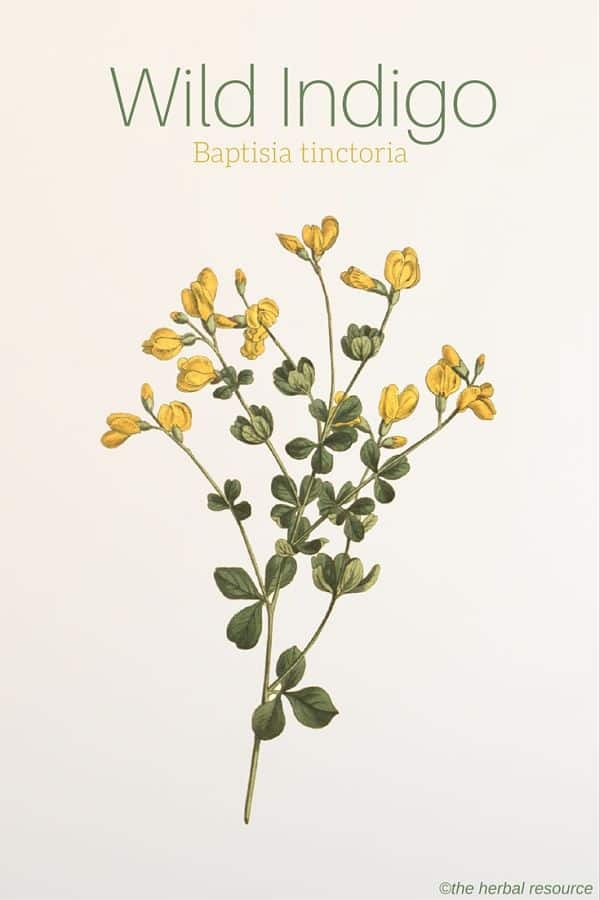
Botanical Name of Wild Indigo: Baptisia tinctoria.
Other Common Names: Broom-clover, Baptisia, indigo-weed, horsefly-weed, indigo-broom, shoofly, yellow indigo, American indigo, yellow broom, cloverbroom, rattlebush.
Habitat: Wild indigo grows mainly along the Eastern Side of the United States – from Maine to Minnesota and all the way south to Florida, but typically no further than southeast of Louisiana.
Plant Description: Wild indigo is a perennial plant that grows about 2 to 3 feet in height and grows a 3-leaved, bluish-green clover-like leaves.
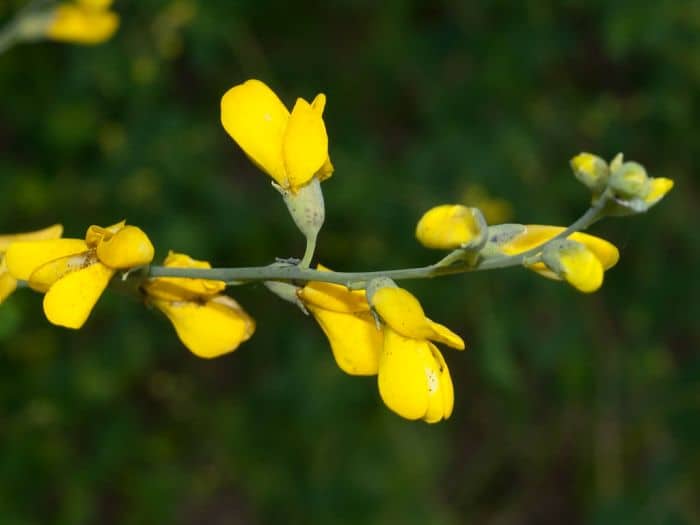
The flowers are yellow and appear in numerous clusters. The plant belongs to the same family as the common clover, the pea family (Fabaceae). It flowers from June to September.
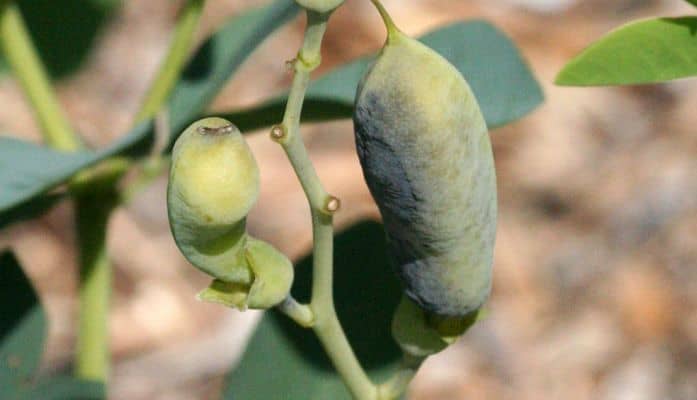
The seed pods form on stalks longer than the calyx and are nearly globular or ovoid and are tipped with an awl-shaped style.
Wild indigo is frequently used by farmers, especially in Virginia and Maryland, to keep flies away from horses. It is not uncommon to see bunches of it being fastened to the harness for this purpose.
Plant Parts Used: The root.
Therapeutic Benefits & Uses of Wild Indigo and Claims
Historically, the root of wild indigo was used by European herbalists to treat ulcers and several types of infections, including those affecting the mouth and gums, lymph nodes, and throat.
Wild indigo is rarely used alone. Instead it is used in conjunction with other herbs, such as echinacea and thuja in the treatments of colds and flu. The root contains alkaloids, which may contribute to its medicinal actions.
More recently and in part due to research which has shown that it can stimulate the immune system, it has been applied as an herbal remedy in the treatment of common colds, sore throats, infections and influenza.
It has also been found to be of use in the treatment of infections of the ear, nose and throat.
It can be helpful as a treatment for laryngitis, tonsillitis, pharyngitis and catarrhal infections of the nasal and sinus passages.
When wild indigo is used for the treatment of infections it will commonly be used in conjunction with echinacea and myrrh.
If it is a lymphatic problem, then typically it will be combined with a cleaver and poke root.
It can help to heal ulcers in the mouth, gingivitis, and help in the control of pyorrhea.
There has been some use of wild indigo as a systemic treatment for enlarged and inflamed lymph glands and also to reduce fevers.
It has also been used to heal skin ulcers and ease sore nipples as an external application.
Dosage and Administration
Tea: Put 1/2-1 teaspoonful of the dried root in a cup of water, bring to the boil and simmer for 10-15 minutes. This should be drunk three times a day.
Tincture: Take 1 ml of the tincture three times a day.
It can be taken internally as a mouthwash or used externally as an ointment.
Side Effects and Possible Interactions of Wild Indigo
Pregnant or nursing women should not use wild indigo.
There is some indication that large doses are toxic – this can present as nausea, vomiting, diarrhea, ptyalism, tachycardia, respiratory paralysis and death.
Wild indigo should only be used under the guidance of a qualified health care practitioner.
Small children should only be recommended this herb under the guidance of a qualified health care professional.


Thordur Sturluson
Latest posts by Thordur Sturluson (see all)
- What is the Difference Between Hemp and Marijuana? - June 3, 2019

Leave a Reply