Botanical Name: Calendula officinalis.
Other Common Names: Marigold (though it should be noted that not all garden plants called marigold belong to the calendula family), bull flower, bull’s eyes, butterwort, death-flower, garden marigold, gold bloom, golden flower of Mary, holligold, , marsh marigold, Mary bud, Mary gowles, poet’s marigold, pot marigold, water dragon.
Habitat: Calendula is native to Mediterranean countries, but has been naturalized in North America and Asia and now blooms in gardens throughout the world.
This plant thrives in almost any soil type but prefers light to sandy and moderately rich, well-drained, soils. Calendula prefers full sun exposure but tolerates light shade.
Plant Description: Calendula is a self-sowing annual plant that belongs to the family Asteraceae, which also includes daisies, chrysanthemums, and ragweed.
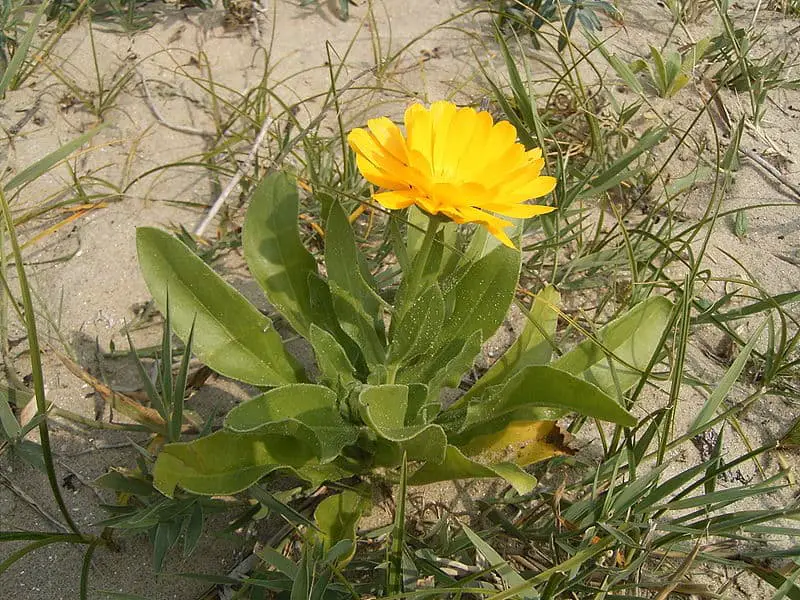
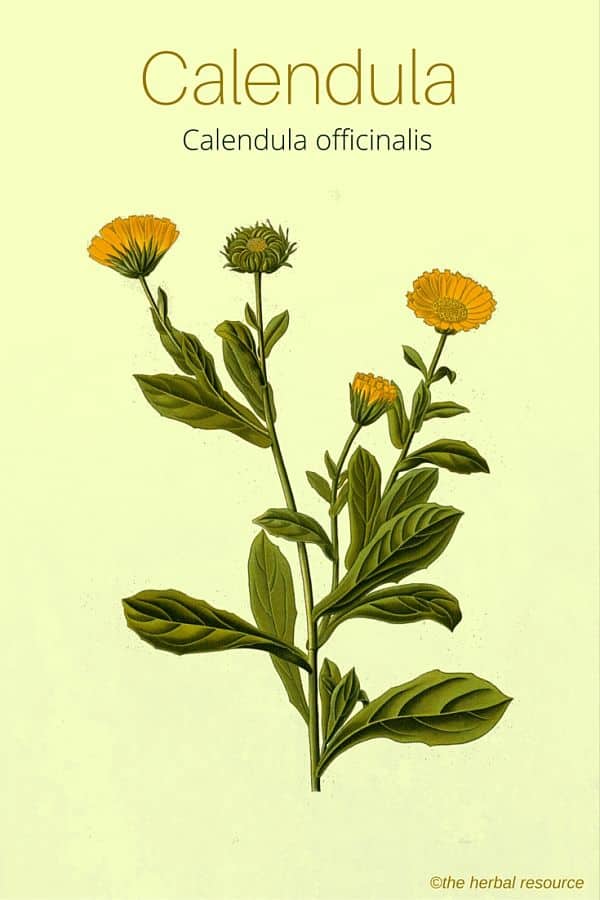
Plants grow 30-60cm high with a branching stem pattern. The lower leaves are paddle-shaped compared with the smaller pointed upper leaves.
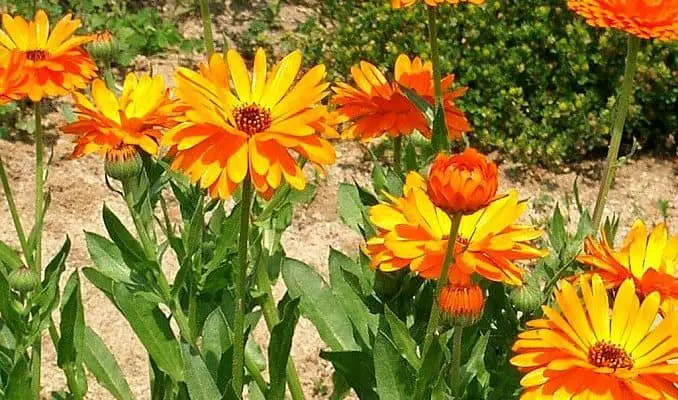
The bright yellow or orange flowers bloom from early spring until the first frost. Side branches and dead blooms should be pruned to promote taller growth as well as larger and more continual blooms.
Calendula is normally resistant to pests and diseases.
It should not be confused with plants belonging to the genus Tagetes, which are true marigolds and are also cultivated as garden plants commonly known as French or African marigolds.
Plant Parts Used
Calendula flower petals are used fresh or dried.
Therapeutic Uses, Benefits and Claims of Calendula
Calendula has been used for medicinal purposes since at least the 12th century, primarily as a topical application to boost the healing rate of wounds and prevent infection.
Calendula contains high amounts of flavonoids, which are thought to increase the rate of neo-vascularization and deposit hyaluronan, the principal component of the extracellular matrix in cells.
Hyaluronan contributes to cell proliferation and migration as well as the formation, alignment, and migration of capillaries, which may explain why calendula speeds healing.
The antifungal properties of calendula could make it useful as an herbal remedy for fungal infections like thrush, athlete’s foot, and ringworm.
The essential oil can even be used in a suppository to treat vaginal yeast infections.
Calendula is also thought to inhibit the proliferation of the bacterium Helicobacter pylori, which is associated with gastritis, peptic ulcers, stomach cancer, and very recently, Parkinson’s Disease.
Calendula is believed to have a positive effect on the immune system. The flavonoids found in calendula are a plant-based antioxidant that neutralizes the free radicals known to suppress immune function.
The estrogenic effects of calendula, could make this herb useful to treat some of the symptoms of menopause as well as symptoms associated with menstruation.
It has been used to relieve breast tenderness and menstrual cramps, as well as to restore regularity to menstruation.
Calendula has also been used to promote uterine contractions and it has been used to aid in the delivery of the placenta after childbirth.
Additionally, calendula is a common ingredient in creams used to soothe sore nipples associated with breastfeeding.
Calendula is commonly used as an herbal treatment for the relief of skin disorders. It is used to heal minor burns, including sunburns, and it is a traditional herbal remedy for the treatment of rashes, including diaper rash. This herb has also been used to treat systemic skin problems such as dermatitis, eczema, acne and psoriasis.
It has even been shown to prevent dermatitis in breast cancer patients during radiation therapy, and there is evidence that it may be more effective than trolamine lotion.
Calendula has detoxifying properties. It is used to promote functioning and detoxification of the liver and gallbladder, which could be helpful to resolve some digestive problems.
It has also been used to promote sweating, which helps rid the body of toxins.
This herb is sometimes used as a natural treatment for ear infections when administered as an ear drop, particularly in children.
Chronic conjunctivitis can be treated naturally with a calendula wash.
The herb may reduce swelling and redness associated with this eye infection, though any treatment used on eye membranes should be sterile.
This plant has also been used as an herbal remedy to treat muscular spasms or cramps, boils, bruising, abscesses, cold sores, chronic gum disease, varicose veins, persistent dysentery, snake and scorpion bites, bee stings, light frostbite, haemorrhoids, and viral hepatitis.
Its usefulness in the treatment of some cancers is also being investigated.
Dosage and Administration
Calendula products should always be stored in dark places free of moisture, and should not be used after three years of storage.
An infusion can be made using 1 tsp (5-10g) of dried florets in 8oz (250 ml) of boiling water. It should be steeped 10-15 minutes. Drink 2-3 cups of the infusion per day.
A cooled infusion can be used to make a compress by soaking a sterile dressing in cold tea.
A tincture can be prepared in a ratio of 1:5 in 90% alcohol; take 5-10 drops (1-2 mL) of the tincture three times daily.
Calendula can also be prepared in an ointment containing 2-5% calendula (e.g. 2-5 grams calendula/100g ointment). It can be applied 2-4 times daily as needed.
Potential Side Effects of Calendula
Calendula is considered to be a very safe herb, but herbal supplements should always be used with caution as they may interact with other herbs, supplements or medications.
In particular, it may interact with sedative and antihypertensive (blood pressure) drugs. When in doubt, consult a health professional.
Calendula may cause a skin rash among people who are sensitive to plants in the aster family, such as daisies, chrysanthemums, and ragweed.
Calendula is known to affect the menstrual cycle and should not be used during pregnancy and breastfeeding.
It may also affect couples’ ability to conceive as chemical compounds in the plant may be toxic to sperm and may prevent fertilized eggs from implanting properly.
This herb should only be used topically on children.


Thordur Sturluson
Latest posts by Thordur Sturluson (see all)
- What is the Difference Between Hemp and Marijuana? - June 3, 2019

After being hospitalized for the fourth time, late January 2018, I’ve been drinking calendula tea for about a week, the cellulitis and swelling in my leg started to go within 24 hours. It’s amazing…but it does make your pee smell awful!!!
HOW IS CALANDULA EXCREATED – WILL THAT AFFECTED KIDNEY FAILURE ? IT IS SAFE TO GIVE TO SOME ON STAGE 3 KIDNEY FAILURE