Botanical Name: Crataeva nurvala.
Other Common Names: Three leaved caper, barun, baruna, borun, crataeva, varun, bonna pithagola.
Habitat: Varuna is found throughout India, especially in sub-Alpine zones along streams and rivers.
It prefers a wet soil with a pH of 7, with abundant sunlight. It is found in abundance in Kerela, Madhya Pradesh, Bengal, and Assam.
Varuna is frequently found planted near temples, where it is cultivated for its healing qualities.
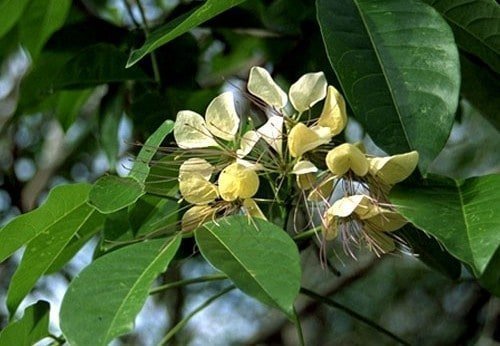
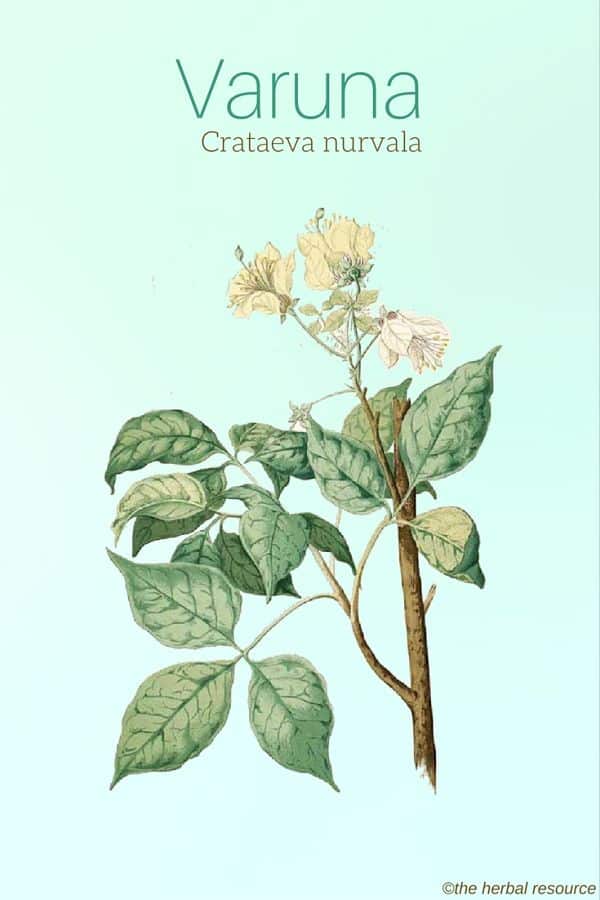
Plant Description: Crataeva nurvala is a medium-sized, deciduous tree which may reach a height of 50 feet. The bark is smooth and brown while the branches have white patches tinged with purple and yellow.
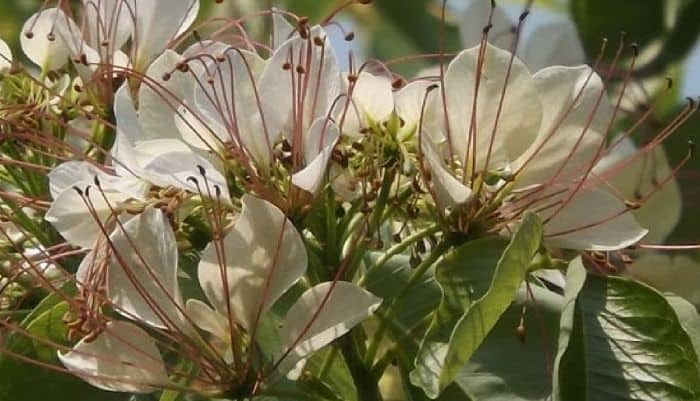
The leaves of the varuna are trifoliate, 8-12 cm long, with oval leaflets. The flowers are greenish-white, light yellowish or creamy colored, and are fragrant. The plant flowers in March and fruits in June.
The fruits are ovoid berries, 2.5 cm in diameter, resembling a lemon and ripening to a red color.
Plant Part Used: Bark, root bark, and leaves.
Therapeutic Uses, Benefits, and Claims of Varuna
The key constituents of crataeva nurvala are alkaloids; triterpenes; tannins; saponins; flavonoids; plant sterols; and glucosilinates.
The main health actions of crataeva nurvala are diuretic, antilithiatic, rubefacient (reddening the skin by producing hyperemia) and anti-inflammatory.
The bark of varuna is believed to have antioxidant, contraceptive, anti-inflammatory, antimicrobial, and urinary-renal supportive qualities, the root is laxative and lithinotriptic and the leaves are believed to be stomachic and tonic.
Crataeva nurvala is one of the best litholytic herbs (ability to break up stones).
Scientific research has indicated that a constituent of varuna, lupeol, deactivates the enzyme glycolate oxidase, reducing the body’s production of oxalates which combine with calcium to form kidney stones.
Additionally, varuna is used as a natural diuretic as it also could hinder kidney stones formation.
Crataeva nurvala is an important Ayurvedic herb that is especially valued for its effectiveness in the treatment of renal conditions.
Varuna is used by traditional Ayurvedic herbalists to increase appetite while stimulating digestion and elimination and also as an herbal treatment for flatulence and abdominal pain.
Varuna is also discussed in the ancient Vedic literature as an important herb for use as a blood purifier.
The bark of the varuna is believed to be especially effective when used to treat infections of the urinary tract.
Crataeva nurvala is believed to relieve difficulty in urination caused by enlarged prostate and it has been used traditionally as a natural herbal treatment in urinary calculi, dysuria (painful urination) and cystitis.
Varuna is often used topically to dilate superficial capillaries and stimulate circulation and scientific research has demonstrated that varuna may support the cardiovascular system by maintaining the suppleness and openness of the arteries.
Taken internally, varuna is used to reduce fever and a decoction made from varuna leaves has also been used as a natural remedy for fever and associated delirium.
Crataeva nurvala is used as a cholegogue (promotes the discharge of bile from the system), anthelmintic (expels worms) and anti-amoebic in both intestinal and hepatic infestations.
Varuna is considered to be a useful herb for anorexia, tumors and liver disorders and externally, varuna is used as a poultice for the treatment of cervical adenitis, abscess, enlarged spleen, rheumatic joint pain, and edematous wounds.
The fresh juice of leaves of varuna is commonly used as a bitter tonic.
Dosage and Administration
Varuna may be used externally as a poultice or taken internally in various forms – either as a tea or a tincture.
Topical leaf paste (practitioner directed): once a day as directed,
Tea: 50 ml twice a day.
Tincture: 200 mg orally twice a day (standardized to 1.5% triterpene lupeol).
Side Effects and Possible Interactions of Varuna (Crataeva Nurvala)
Varuna bark and root appear to have very little evidence of toxicity when used in normal dosages. Herbal medicine is not meant to be an alternate or replacement for knowledgeable medical recommendation or care.
It should always be taken as per the instructions or directions of the physician or healthcare provider who is recommending its use.
Some reports indicate that topical leaf applications may cause blistering when used on a sensitive skin in humans.


Thordur Sturluson
Latest posts by Thordur Sturluson (see all)
- What is the Difference Between Hemp and Marijuana? - June 3, 2019

Varun purifies blood, removes dark circles and skin blemishes and dark skin around face , this is my personal opinion and experience, please consult doctor before use. it also purify blood. my skin brightned after using this. please consult doctor always
Can you teams me how to take varuna internally? How do you make a tea out of bark? I bought varuna on ebay… but i don’t know how to use it … ill appreciate if you teach ME
Hello which form of Varuna did you use ? And which brand ? Please help I have really bad health issues
Where can a quality brand be purchased? I looked on Amazon but very few options.