• Skip to primary navigation
  • Skip to main content
  • Skip to primary sidebar
  • Skip to footer

The Herbal Resource

Information on Medicinal Herbs & Functional Medicine

  • Home
  • Herbs List
  • Herbs by Health Condition
  • Latest Posts
  • Phytochemicals
  • Our Authors

What is Stinging Nettle used for?

December 19, 2021 by Herbal Resource 2 Comments

Pin334
Share
Share
Tweet
Flip
Reddit
Share
334 Shares

Stinging nettle contains amines, flavonoids, lignans, minerals ( calcium, potassium, iron, and silicon) and vitamins A, B2, C and K.

It also contains organic acids, scopoletin (isolated from the flowers), plant sterols, polysaccharides, lectins, and tannins.

Used for hundreds of years as an herbal remedy, the herb is best known for its ability to ease the pain in the muscles and joints caused by arthritis and gout.
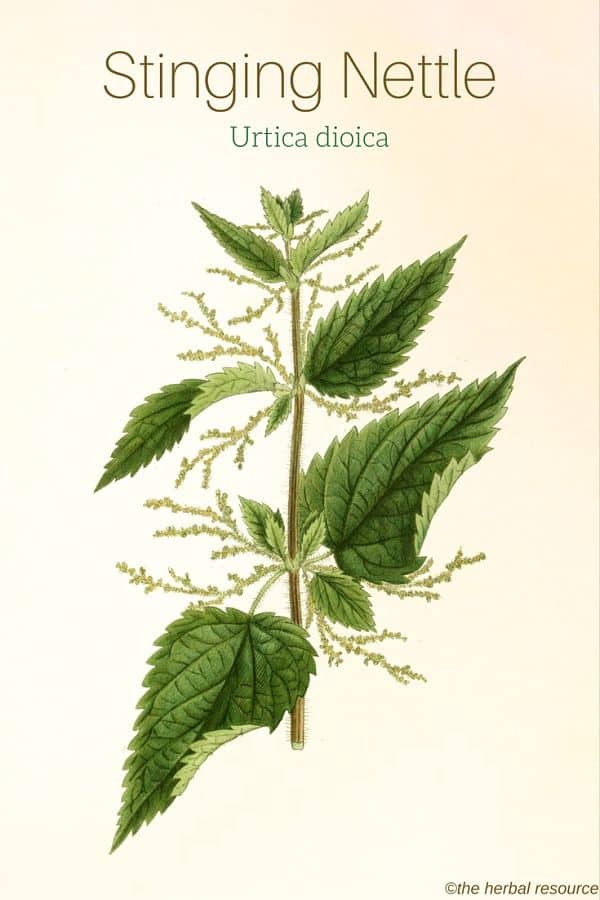
Stinging Nettle Urtica dioica
Stinging Nettle (Urtica dioica) – Illustration ©the herbal resource

Stinging nettle is used as a diuretic and laxative. Various extracts of stinging nettle have shown to be effective in treating diarrhea, edema and urinary disorders, as well as prostate diseases.

In several European countries, the herb has become a preferred treatment for early stages of benign enlargement of the prostate gland, often called benign prostatic hyperplasia or BPH.
Clinical studies have shown that the herb can ease the symptoms of benign prostatic hyperplasia, especially in the early stages.

As a treatment of BPH stinging nettle is often used in combination with other herbs like saw palmetto (Serenoa repens), pygeum (Pygeum africanum) and pumpkin (Cucurbita pepo).

Used directly on the hair, stinging nettle is thought to add shine, and prevent oily hair and dandruff.

It is also believed to be effective in treating or preventing baldness, as well as getting rid of head lice.

Stinging nettle has shown promise in reducing sneezing and itching as results from hay fever. This use as an herbal remedy for hay fever is successful due to the nettles ability to reduce the body’s production of histamines in relation to the allergen.

Used as a medicinal herb to treat respiratory issues such as asthma, bronchitis, sinusitis and allergies.

Stinging nettle is thought to be an effective histamine blocker as well as an inflammation reducer, and it has been used to treat allergic rhinitis without the side effects of popular allergy medications.

Taken internally, It may be effective against ulcers, intestinal inflammation, and hemorrhoids.

Stinging nettle contains 3,4-divanillyltetrahydrofuran, which is used by bodybuilders to increase free testosterone.

The herb shows promise as a possible treatment for Alzheimer’s disease and ADHD.

In studies, the herb has shown positive results against some types of cancer, including prostate cancer.

Because of its high vitamin K content, fresh stinging nettle can be used as a poultice to stop bleeding wounds and has also been used to stop excessive menstrual bleeding, nosebleed, and other abnormal bleedings.

While fresh stinging nettle helps stop bleeding, dried stinging nettle has little vitamin K and is used as a blood thinner, making it useful herb against high blood pressure.

[Read more about Stinging Nettle…]

The following two tabs change content below.
  • Bio
  • Latest Posts
Avatar photo

Herbal Resource

The Herbal Resource was created out of a passion for all natural health solutions and to inform on what nature can provide to heal. Staffed by a group of functional medicine advocates, scientists and natural health experts, we use science to support how natural can help bring health to people.
Avatar photo

Latest posts by Herbal Resource (see all)

  • The Surprising Ways Different Parts of a Common Weed Can Benefit You - March 9, 2026
Pin334
Share
Share
Tweet
Flip
Reddit
Share
334 Shares

Filed Under: Herbs - General

Avatar photo

About Herbal Resource

The Herbal Resource was created out of a passion for all natural health solutions and to inform on what nature can provide to heal. Staffed by a group of functional medicine advocates, scientists and natural health experts, we use science to support how natural can help bring health to people.

Reader Interactions

Comments

  1. Lilian says

    January 3, 2022 at 1:36 am

    Thank you. You are truly noble and great people. Keep it up

    Reply
  2. Darrel says

    January 12, 2022 at 12:35 pm

    I thoroughly enjoy reading about the uses of plants. It’s a great refresher as I tend to forget about what certain plants contribute. Thank you

    Reply

Leave a Reply Cancel reply

Your email address will not be published. Required fields are marked *

Primary Sidebar

HSR Newsletter Sign-up

loader

Email Address*

Your e-mail address is only used to send you our newsletter and information about the activities of The Herbal Resource. You can always use the unsubscribe link included in the newsletter.

Footer

  • Newsletters
  • Deals
  • Ethical Foraging – Do’s and Don’ts
  • Write for Us
  • Partner, Advertising & Commercial Relationships
  • Affiliate Agreement
  • Affiliate Disclosure
  • Privacy Policy
  • Terms of Use
  • About Us
  • Contact Us

Categories

  • Functional Medicine
  • Grow Your Own Herbs
  • Herbs – General
  • Herbs – Scientific Evidence
  • Herbs for Specific Ailments
  • Medicinal Herb Profiles
  • Phytochemicals
  • Poisonous Plants
  • Sponsored Posts
  • Uncategorized

Follow

Subscribe to notifications

Contact Information

Email: herb@herbal-supplement-resource.com

Amazon Affiliate Disclosure Statement

The Herbal Resource is a participant in the Amazon Associates Program as well as with other affiliate partners.

An affiliate advertising program designed to provide a means for sites to earn fees by advertising and linking to their products and services.

Looking for Something?

© Copyright 2018 The Herbal Resource · All Rights Reserved!